Harvest guide
When to Harvest Basil (and Keep It Coming All Summer)
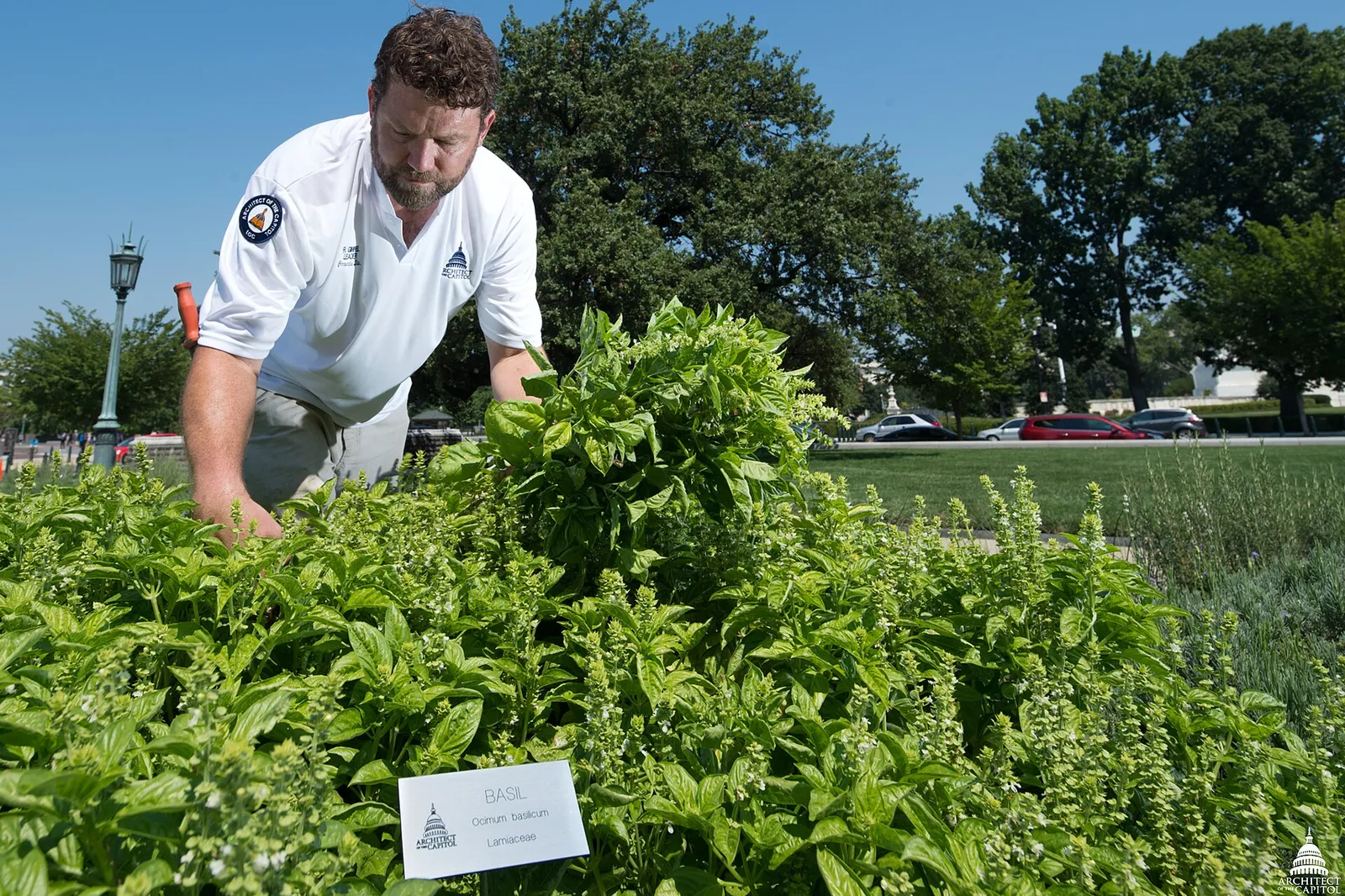
Basil is ready for its first harvest about 60 to 70 days after sowing, once a plant is 6 to 8 inches tall. Cut above a leaf pair to keep it branching, pinch off flowers, and harvest the same plant again and again.
Days to maturity
50–75days
Ready when
6+ leaf sets; pinch before flowering
The short answer
Basil is ready for its first harvest about 60 to 70 days after sowing, once a plant is 6 to 8 inches tall with several sets of leaves. Cut the stem tip just above a pair of leaves so two new shoots branch out. Then keep harvesting the same plant again and again through summer, and pinch off any flower buds to keep the leaves coming.
Basil is not a one-and-done crop. You take a little off the top, it branches, and a week later there is more to cut. The trick is knowing when to start, where to cut, and how to stop it from flowering. Here is all three.
When basil is ready for its first cut
The first harvest comes about 60 to 70 days after sowing. UMass Extension puts the first basil harvest at 60 to 70 days after seeding, which lines up with the 60-to-75-day window most seed packets print.
But the calendar is only half the story. The plant tells you the rest. Once it stands 6 to 8 inches tall and has a few sets of leaves, it is ready, and that first cut is what makes it bush out instead of growing tall and leggy.
| Stage | Plant size | Roughly when | What to do |
|---|---|---|---|
| Too young | Under 6 in, few leaves | First few weeks | Leave it. Let it root in and branch. |
| First harvest | 6–8 in tall | About 60–70 days | Pinch the top above a leaf pair to start branching |
| Cut-and-come-again | Bushy, regrowing | All summer | Take top growth every 1–2 weeks |
| Flowering (act now) | Buds or spikes forming | Mid to late summer | Pinch off flowers to keep leaves coming |
Treat the days as a guide, not a deadline. Warmth speeds basil up and a cool spell slows it down, so trust the 6-to-8-inch height over the number on the packet.
How to tell it is ready
The calendar gets you close. The plant confirms it.
Check these three things before you make the first cut:
- Height. The plant should be about 6 to 8 inches tall. UMass Extension has plants ready to prune around 6 inches. Shorter than that and it needs more time to build roots and side shoots.
- Leaf sets. Look for several sets of true leaves stacked up the stem. You want enough that you can take the top and still leave the bottom two to four sets behind.
- No flowers yet. The best leaves come before the plant blooms. If you see buds forming at the tips, the clock is running, so harvest and pinch them off now.
When in doubt, smell a leaf. Strong, sweet, and fragrant means it is ready to use.
How to cut basil so it keeps growing
Where you cut decides whether the plant bushes out or gives up. Cut in the right spot and one plant feeds you all summer.
Cut the stem tip just above a pair of leaves. UMN Extension says when you harvest a whole stem, cut just above a pair of leaves, and new growth shows at the cut within a week. Two new shoots push out from the leaf pair below, so every cut roughly doubles the branching. That is the whole secret to a bushy plant.
Always leave the bottom leaves on. Purdue Extension says to harvest only above the bottom two to four sets of true leaves, and to cut the foliage 4 to 6 inches above the ground so it can regrow. Strip a plant bare and it has nothing to rebuild from.
Harvest little and often. A light cut off the top every week or two keeps a plant producing far longer than one hard chop. This is the same cut-and-come-again habit that works on leafy greens, except basil wants warmth, the way peppers do, not the cool weather that suits lettuce and spinach.
Pro tip
Harvest from the top, not the sides. Pinching out the growing tip above a leaf pair forces the two buds below it to branch, so the plant gets wider and fuller every time you cut. Pulling single lower leaves does the opposite and leaves you with a tall, bare stem. Take the tips, leave the base, and one plant keeps up with a steady kitchen.
Keep it from flowering
Flowering is the thing that ends a basil harvest, and it sneaks up in midsummer. Once the plant starts making flower spikes, it shifts its energy to seed and stops putting it into leaves.
Purdue Extension says basil grown for its leaves is harvested before bloom, and the flower spikes are removed, or the plant will seed and quit producing. UMN Extension is blunter: let basil flower and form seed and it turns woody, with much smaller yields. UF/IFAS says to pinch off the flowers as they form to keep the plant's energy in the leaves.
So watch the tips. The day you spot a bud, pinch it off down to the next leaf pair. Stay on top of it and a single plant keeps making good leaves right up to the first frost.
Storing basil without ruining it
The biggest storage mistake is the fridge. Basil is a warm-weather herb and the cold blackens it.
UC Davis Postharvest lists basil as chilling sensitive and says it should be stored above 50°F, not in a standard cold refrigerator, because the cold causes chilling injury and the leaves darken. So store a fresh bunch like cut flowers: trim the stems and stand them in a glass of water on the counter, out of direct sun.
For anything beyond a few days, preserve it. UMN Extension says to dry or freeze basil for later use. Freezing usually holds the fresh flavor better, whether you freeze whole leaves, blend it into ice-cube trays with a little water, or chop it into oil. Either way, harvest in the morning when the leaves are at their most fragrant.
Common mistake
Two things wreck a basil crop. Letting it flower is the big one. The moment those spikes appear the plant slows its leaf-making and the flavor turns harsh, so pinch buds the day you see them. The second is the cold fridge. Basil is chill-sensitive, and a few days in the crisper turns the leaves black and slimy. Keep cut basil at room temperature in water, and dry or freeze the rest.
Give it room to branch
Basil that is crowded grows tall and thin and reaches for light instead of bushing out, which is exactly the shape you do not want for a leaf harvest. Give each plant space and it branches wide and gives you far more to cut.
Set basil about 8 to 10 inches apart, or 4 plants per square foot in a square-foot bed. The guide to how far apart to plant basil has the full spacing detail, and if you are still timing the season, when to plant basil covers getting it in the ground. Basil also earns its spot beside tomatoes, which the basil companion plants guide explains.
Your next step
Basil is ready for its first cut about 60 to 70 days after sowing, once it is 6 to 8 inches tall. Cut the tips just above a leaf pair, leave the bottom leaves on, pinch every flower bud, and one plant keeps producing all summer.
Planning the bed for next year? Open the guide to how far apart to plant basil and give each plant the room it needs to branch wide and feed your kitchen.
Common questions
How do you know when basil is ready to pick?
Pick once a plant is about 6 to 8 inches tall and has several sets of leaves. UMass Extension lists the first basil harvest at 60 to 70 days after seeding. After that you harvest the same plant over and over by taking the top growth, as long as you leave the lower leaves to keep it going.
How do you cut basil so it keeps growing?
Cut the stem tip just above a pair of leaves. University of Minnesota Extension says new growth appears at the cut within a week, and two new shoots branch out from the leaf pair below. Always leave the bottom two to four sets of true leaves on the plant, per Purdue Extension, so it can rebuild.
Should you let basil flower?
No, not if you want leaves. Purdue Extension says basil grown for leaves should be harvested before bloom, and the flower spikes removed, because the plant will set seed and stop making leaves if you leave them. UMN Extension notes a flowering plant turns woody and yields much less. Pinch buds the moment you see them.
How much basil can you harvest at once?
Leave at least the bottom two to four sets of true leaves, per Purdue Extension, and cut the foliage about 4 to 6 inches above the ground so it regrows. A light, frequent harvest of the top growth beats one hard cut. Taking no more than about a third of the plant at a time keeps it producing.
How do you store fresh basil so it lasts?
Keep it warm, not cold. UC Davis Postharvest says basil is chilling sensitive and should be stored above 50°F, because the cold makes the leaves blacken. Stand cut stems in a glass of water on the counter. For longer storage, UMN Extension says to dry or freeze it.
Sources
Agronomic claims in this guide are checked against these primary sources.
- Basil — UMass Extension Center for Agriculture, Food, and the Environment
- Sweet Basil — Purdue Extension
- Growing basil in home gardens — University of Minnesota Extension
- Basil — UF/IFAS Gardening Solutions
- Herbs (Fresh Culinary): Recommendations for Maintaining Postharvest Quality — UC Davis Postharvest Technology Center
Keep reading
When to Plant Basil (Frost and Soil Temperature)
Plant basil outdoors 1 to 2 weeks after your last spring frost, once nights stay above 50 F and the soil has warmed. Start seeds indoors 6 weeks before the last frost for an early crop.
Read →Basil Companion Plants (What Works and What's a Myth)
Basil grows well next to tomatoes, peppers, eggplant, and most summer vegetables, and its flowers draw pollinators when it blooms. The popular "improves tomato flavor / repels pests" claims are mostly traditional, not proven. Here is what the evidence actually supports.
Read →When to Harvest Peppers (Green vs Ripe)
Bell peppers are full size and firm at green stage around 60 to 70 days, and fully ripe in red, yellow, or orange around 80 to 90 days. Here are the cues, the cut-don't-pull method, and the green-versus-ripe trade-off.
Read →When to Plant Zucchini (Frost + Soil Temp Timing)
Plant zucchini after your last spring frost, once the soil hits at least 60 F (ideally 65 to 70 F). Direct-sow seeds 1/2 to 1 inch deep, or set out transplants started 2 to 4 weeks earlier. Warm zones get a second fall crop.
Read →When to Plant Tomatoes (Frost + Soil Temp by Zone)
Set tomato transplants out 1 to 2 weeks after your last spring frost, once soil hits at least 60 F. Start seeds indoors 6 to 8 weeks before that frost date. Cold soil stalls them, so wait for warmth.
Read →When to Plant Swiss Chard (Spring and Fall Timing)
Plant swiss chard 2 to 4 weeks before your last spring frost, once the soil hits 40°F. Sow again 3 to 4 weeks before the first fall frost. Seeds go half an inch to an inch deep.
Read →