Harvest guide
When to Harvest Cucumbers: 4 Signs They're Ready
Cucumbers are ready 50 to 70 days after planting. Check 4 signs (firmness, color, size, no yellowing) before you pick, and harvest every 1 to 2 days.
Days to maturity
50–70days
Ready when
Firm, even green, before yellowing
The short answer
Cucumbers are ready about 50 to 70 days after planting. Check four signs before you pick: firm flesh, even dark green color, the right length for the type (slicing 6 to 8 inches, pickling 2 to 4, burpless up to 10), and no yellowing. Pick every 1 to 2 days once fruiting starts.
The days-to-maturity range gets you in the ballpark. The fruit itself tells you the exact day, and that comes down to size, color, and touch.
Size by type
A cucumber is "ready" at the size that suits how you will use it. A slicer and a pickler off the same kind of plant come off at very different lengths.
Clemson Extension puts cucumbers at 50 to 70 days to maturity depending on the cultivar. Use these lengths as your real signal once the plants start fruiting.
| Cucumber type | Target length | Notes |
|---|---|---|
| Pickling | 2–4 inches | Pick small for crisp pickles, before seeds set |
| Slicing | 6–8 inches | Firm, 1.5 to 2 inches across, still dark green |
| Burpless | up to 10 inches | 1 to 1.5 inches across, longer and milder |
Iowa State Extension lists slicers at 6 to 8 inches long and 1.5 to 2 inches in diameter, and pickling types at 2 to 4 inches. Illinois Extension puts burpless types up to 10 inches at 1 to 1.5 inches across. When in doubt, pick on the small side. Young cucumbers taste better and have softer seeds.
4 signs a cucumber is ready to pick
Run through these four checks before you cut. If a fruit passes all four, it's ready.
- It feels firm. A ready cucumber is solid all the way down, not soft or spongy. Soft spots mean it is past prime.
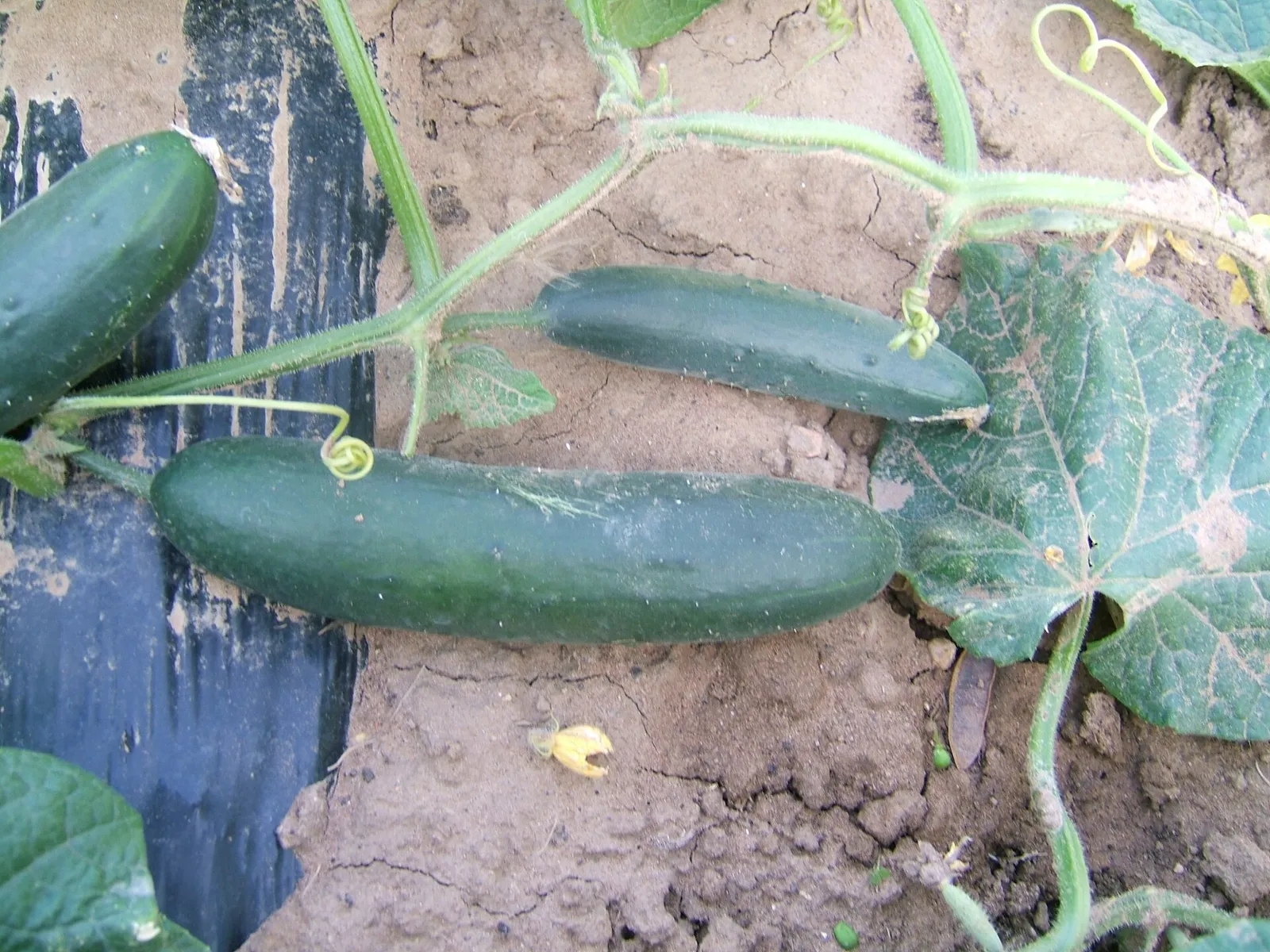
- It's evenly green. The skin should be one even dark green, still a little glossy. No pale belly, no yellow patches.
- It's the right length for its type. Slicers 6 to 8 inches, picklers 2 to 4, burpless up to 10.
- It hasn't started to yellow. Clemson Extension says to pick before the skins begin to yellow, the seeds harden, or the flesh turns bitter.
If a fruit is already yellow or fat with hard seeds, it is past eating. Pull it anyway, for a reason we cover below.
How to harvest cucumbers
Cut, do not pull. Cucumber vines are brittle and the fruit holds on tighter than you expect.
- Cut the stem. Clemson Extension says to harvest by cutting the stem with a sharp knife or pruners. This prevents vine damage and gives a clean break. Leave a short stub of stem on the cucumber.
- Do not yank the vine. Pulling can tear the stem out or rip the whole vine off its trellis. That sets the plant back days.
- Harvest in the morning. SDSU Extension says to pick early in the day for the best flavor and crispness.
Work the whole plant each time, lifting leaves to find the cukes hiding underneath. They blend in with the foliage and are easy to miss until they are oversized.
Why frequent picking matters
This is the part most people get wrong. Picking often is not just about catching fruit at the right size. It is what keeps the plant making more.
Once a cucumber matures and its seeds set, the plant reads its job as done and slows down. Illinois Extension is blunt about it: for pickling types, if a single cucumber is left on the vine, the vine will stop producing altogether. Iowa State Extension adds that over-mature cucumbers left on the vine inhibit additional fruit set.
So one fruit you missed can stall the whole plant. Pick every fruit that hits size, and pull the oversized or yellow ones off too, even the ones you will just compost. Iowa State Extension says to harvest every 2 to 3 days, and Illinois Extension says at least every other day. In hot weather, lean toward daily.
Common mistake
Two mistakes stall a cucumber harvest. Letting fruit yellow or oversize wrecks flavor and, worse, tells the vine to quit. One forgotten cucumber can halt new growth. Pulling instead of cutting tears brittle vines off the trellis and damages the plant. Cut every fruit with pruners, and clear the oversized ones the moment you spot them.
Pro tip
Pick every other day, no exceptions, once the plants start fruiting. Cucumbers can double in size overnight when it is hot, so a "not quite ready" fruit on Monday is oversized by Wednesday. A quick walk down the row with pruners every other morning keeps the fruit small and sweet and keeps the vine setting new flowers. Same rhythm works for when to harvest zucchini, which also quits if you let one get marrow-sized.
Get the spacing right next year
Crowded cucumbers compete for light and air, set fewer fruit, and hide more of what they do set. Give them room and a trellis and the harvest is easier to see and easier to keep up with.
Space cucumber plants by your variety and whether you trellis. The how far apart to plant cucumbers guide covers rows, hills, and trellises, and the Plant Spacing Calculator shows how many fit your bed.
Try it — Plant Spacing Calculator
Full calculatorExtra to cover losses (10% is typical).
You can plant
32plants
- Per row
- 8
- Rows
- 4
- Buy (incl. spare)
- 36 plants
Cucumbers are one of several summer crops that punish you for skipping a few days: ripeness by color matters for when to harvest tomatoes and when to harvest peppers.
Your next step
Cucumbers are ready when they pass all four checks: firm, evenly green, the right length for the type, and no yellowing, somewhere in the 50 to 70 day window. Cut the stem, never pull, and pick every day or two before any fruit yellows.
Planning next season's bed? Open the Plant Spacing Calculator and set your cucumbers with enough room to climb and produce, and check when to plant cucumbers for the soil-temperature window.
Common questions
How do I know when a cucumber is ready to pick?
Look at color, firmness, and size. A ready cucumber is firm and evenly dark green, not yellowing, with skin that still looks glossy. Match the length to the type: slicing cucumbers at 6 to 8 inches, pickling at 2 to 4 inches, and burpless up to about 10 inches. Iowa State Extension says slicers should be 6 to 8 inches long and 1.5 to 2 inches across while still dark green and firm.
What size should I pick cucumbers?
It depends on the type. Iowa State Extension lists pickling cucumbers at 2 to 4 inches and slicing cucumbers at 6 to 8 inches. Illinois Extension puts burpless types up to 10 inches long at 1 to 1.5 inches in diameter. When in doubt, pick on the smaller side. Cucumbers picked young taste sweeter and have softer seeds.
Why are my cucumbers turning yellow?
Yellow means overripe, not ripe. Clemson Extension says to pick before the skins begin to yellow, the seeds harden, or the flesh turns bitter. SDSU Extension notes that very ripe cucumbers turn deep yellow with spongy flesh and seeds too hard to eat. Pull any yellow fruit off and compost it so the vine keeps setting new cucumbers.
How often should I pick cucumbers?
Every day or two during peak season. Iowa State Extension says to harvest every 2 to 3 days, and Illinois Extension says to pick at least every other day. In hot weather cucumbers can size up overnight, so check often. Frequent picking is also what keeps the plant producing.
Should I cut or pull cucumbers off the vine?
Cut them. Clemson Extension says to harvest by cutting the stem with a sharp knife or pruners, which prevents vine damage and gives a clean break. Pulling can tear the stem or rip the vine off its support, which sets the whole plant back. Leave a short stub of stem on the fruit.
What happens if I leave one cucumber on the vine too long?
The vine slows down or stops. Illinois Extension says that for pickling types, leaving a single mature cucumber on the vine can stop the whole plant from producing more. Iowa State Extension adds that over-mature fruit left in place holds back new fruit set. Pull oversized or yellow cucumbers off right away, even if you plan to compost them.
Can you eat a cucumber that's turned yellow?
You can, but it usually isn't worth it. Clemson and SDSU Extension both describe yellow cucumbers as overripe, with tough skin, hardened seeds, and flesh that has gone spongy or bitter. Some cooks scoop out the center and use the flesh anyway, but the texture and taste are well past their best.
Why does a cucumber feel soft when it isn't fully grown?
A soft cucumber isn't unripe, it's past its prime or starting to spoil. Extension guidance ties readiness to firmness along with color and size, so a fruit that feels mushy or gives under light pressure should come off the vine and get composted rather than saved for later.
Is it okay to pick cucumbers before they reach full size?
Yes. Iowa State Extension says that when in doubt, pick on the smaller side, since young cucumbers taste better and have softer seeds than ones left to reach maximum length. Picking a little early costs you almost nothing and keeps the vine setting new fruit.
Do you pick cucumbers when they are still prickly?
Yes, prickly skin is not a ripeness signal. Mississippi State University Extension notes that pickling types are bred with small white or black spines, while slicing types are bred smoother. The spines are a variety trait, not a sign the fruit is unripe, and they usually rub off with normal handling. Go by length, firmness, and color instead.
What month do cucumbers harvest?
It depends on when you plant, not the calendar. University of Georgia Extension says cucumbers need frost-free weather and soil at least 60°F to get started, so most US gardeners plant in late spring. Count forward 50 to 70 days from your planting date, and that is your harvest window, typically mid-summer into early fall.
Sources
Agronomic claims in this guide are checked against these primary sources.
- Cucumber — Clemson Cooperative Extension Home & Garden Information Center
- When should I harvest cucumbers? — Iowa State University Extension and Outreach
- Cucumber — University of Illinois Extension
- Harvesting Cucumbers — South Dakota State University Extension
- How do pickling and slicing cucumbers differ? — Mississippi State University Extension Service
- Growing Cucumbers in the Home Garden — University of Georgia Cooperative Extension
Keep reading
When to Harvest Zucchini (Best Size + Signs)
Zucchini is ready about 45 to 65 days after planting, best picked young at 6 to 8 inches long and about 2 inches thick, when the skin is glossy and a thumbnail dents it easily. Here are the size cues, the cut-don't-pull method, and why you check daily.
Read →When to Harvest Tomatoes (Signs They're Ready)
Tomatoes are ready about 60 to 85 days after transplant, when they are fully colored and give slightly to a gentle squeeze. Here are the cues, the twist-or-cut method, and how to ripen the rest on the counter.
Read →When to Harvest Peppers (Green vs Ripe)
Bell peppers are full size and firm at green stage around 60 to 70 days, and fully ripe in red, yellow, or orange around 80 to 90 days. Here are the cues, the cut-don't-pull method, and the green-versus-ripe trade-off.
Read →When to Harvest Brussels Sprouts: Size, Feel, and Frost Timing
Brussels sprouts are ready 80 to 110 days after transplanting, once the bottom sprouts are 1 to 1.5 inches across and feel firm. Pick from the bottom up, top the plant to size up the rest, and let a light frost sweeten the flavor.
Read →How to Cure Sweet Potatoes (No Root Cellar Needed)
Cure sweet potatoes about 7 to 14 days at 80 to 85°F and 85 to 90% humidity, then store at 55 to 60°F. No greenhouse required, a warm closet works.
Read →When to Harvest Swiss Chard (Signs It's Ready)
Swiss chard is ready for its first cut about 50 to 60 days after sowing, once the outer leaves reach 8 to 12 inches. Take the outer leaves and leave the center, and one plant keeps producing all season.
Read →