Harvest guide
When to Harvest Swiss Chard (Signs It's Ready)
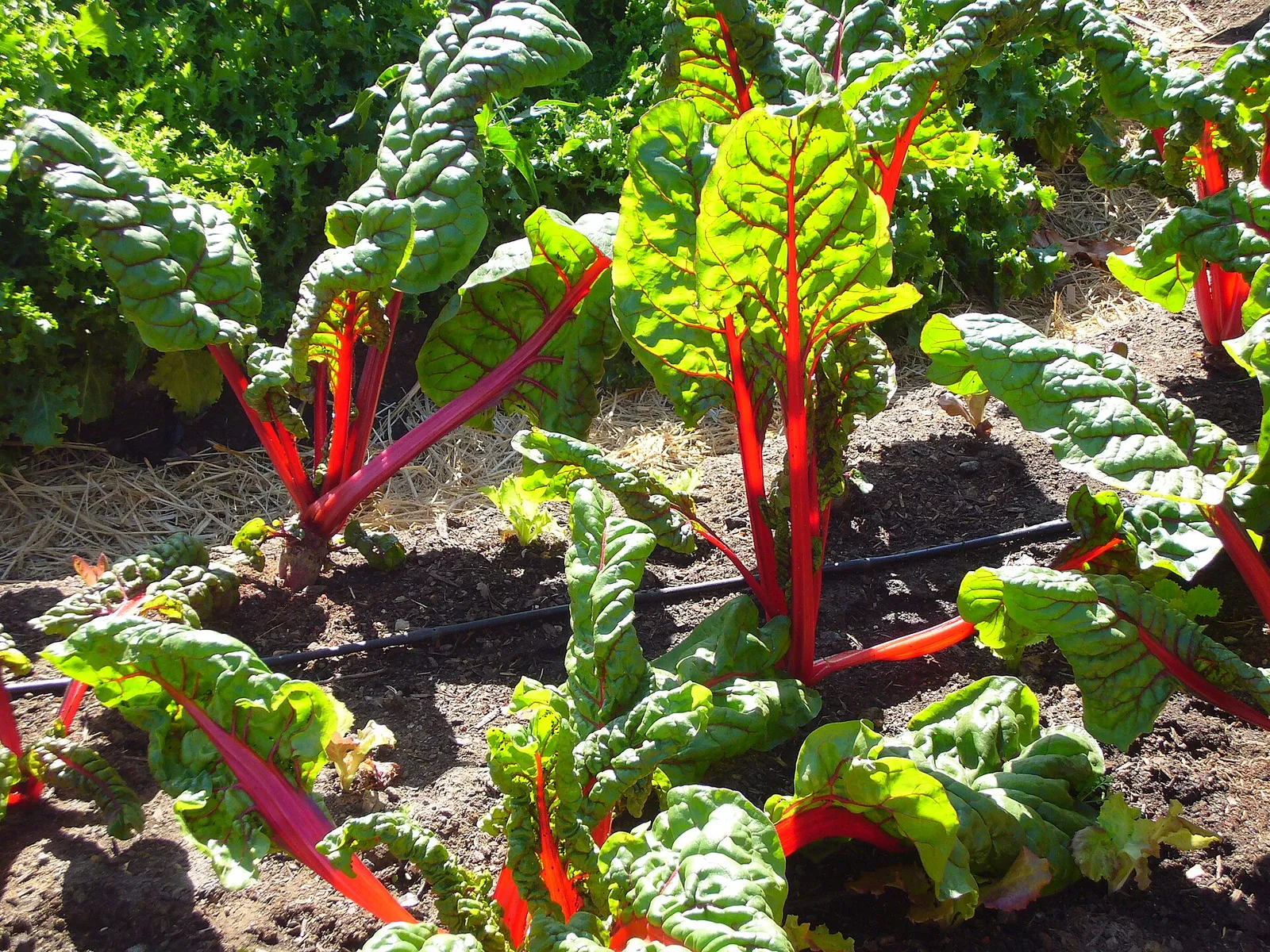
Swiss chard is ready for its first cut about 50 to 60 days after sowing, once the outer leaves reach 8 to 12 inches. Take the outer leaves and leave the center, and one plant keeps producing all season.
Days to maturity
50–60days
Ready when
Outer leaves 8-12in; cut-and-come-again
The short answer
Swiss chard is ready for its first cut about 50 to 60 days after sowing, once the outer leaves reach 8 to 12 inches long. Take the outer leaves and leave the small center leaves growing, and the plant keeps producing for months. Chard is cut-and-come-again, so harvest a few outer leaves at a time, repeatedly, right through fall frosts.
That timing comes from the days-to-maturity range for Swiss chard, and the leaf size is the real signal. The rest of this guide is how to read the plant, cut it so it keeps coming back, and stretch one sowing from summer into frost.
Days to first harvest, then keep cutting
The first harvest lands about 50 to 60 days after sowing. After that, the date stops mattering, because chard is a continuous crop, not a one-and-done one.
University of Minnesota Extension puts Swiss chard at roughly 45 to 55 days to maturity, and Wisconsin Extension says it is ready in about two months, near 55 to 65 days depending on variety. Most seed packets land in the 50 to 60 day band. Treat it as a window, not a deadline.
| Stage | Leaf length | Roughly when | What to do |
|---|---|---|---|
| Baby leaves | 3–4 inches | 30–40 days | Snip a few for salads |
| First full harvest | 8–12 inches | 50–60 days | Take the outer leaves, leave the center |
| Ongoing harvest | 8–12 inches | Every 1–2 weeks after | Keep cutting outer leaves all season |
The single most useful thing to know about chard: you start picking once, and then you never really stop until frost ends it.
How to tell it's ready
The calendar gets you close. The outer leaves tell you the truth.
Check these signs before you cut:
- Outer leaves at 8 to 12 inches. Illinois Extension harvests the young, tender outer leaves when they are about 8 to 12 inches long. That is your green light.
- At least five or six leaves on the plant. A plant with a full rosette can spare its outer leaves without stalling. If it only has a few small leaves, give it another week.
- Leaves still tender, not leathery. Younger leaves taste best. MSU Extension says the younger leaves are the tastiest and to pick before they get too big, and Wisconsin Extension says chard is best when leaves are just fully expanded or slightly earlier. Do not wait for the biggest possible leaf.
When in doubt, take the largest outer leaves and leave the rest. You can always come back in a few days.
How to harvest without killing the plant
The whole trick with chard is where your blade lands. Cut the outer leaves and leave the center, and one plant feeds you for months.
Take the outer leaves, leave the inner ones. Cut or snap the outer stalks off close to the base, about an inch above the crown. Illinois Extension warns not to damage the terminal bud, the central growing point, since that is what keeps the plant producing greens all season. This is the same outer-leaf method that keeps spinach coming back, except chard does it far longer.
Never cut the whole plant to the ground if you want it to regrow. Cutting the crown out ends the plant. For a baby-leaf bed sown thick, you can shear the patch to about 3 inches above the soil and let it regrow, but for full plants, stick to outer leaves.
Harvest in the cool morning. The leaves are firm and full of water then, so they hold up instead of wilting on the way inside.
Pro tip
Treat chard as a standing crop you visit, not a harvest you finish. Walk the row every week or so and take the three or four biggest outer leaves from each plant. By the time you reach the end of the row, the first plants have pushed new leaves. Wisconsin Extension says you can remove a few leaves at a time for a continuous harvest through the whole season, which is exactly how a short row keeps feeding you for months.
Keep it producing into frost
Chard does not quit when the nights cool. It is one of the most cold-tolerant greens in the garden, and it often outlasts the first frosts by weeks.
Wisconsin Extension says chard is quite cold tolerant and keeps growing through frosts until temperatures drop into the mid-20s°F, and that a cold frame can keep it fresh well into December in cooler regions. In mild-winter areas it can survive the winter and resume growing in spring. So when the first light frost hits, do not pull the plants. Keep cutting.
That cold-hardiness is why chard earns its spot in the fall garden the same way kale does. Both shrug off frosts that finish off tender greens.
How to store it after cutting
Chard does not keep long, so cut what you will use within a few days. The leaves wilt fast once they are off the plant.
Rinse the leaves, dry them well, and store them in a plastic bag in the crisper drawer. They hold best cold and humid, which is exactly what the crisper is for. For the longest life, harvest in the morning and refrigerate the leaves right away rather than letting them sit warm in a basket.
Common mistake
Two things waste a chard harvest. The first is cutting the whole plant to the ground, which rips out the growing center and ends the cut-and-come-again. Take outer leaves and leave the crown. The second is letting the leaves get oversized. MSU Extension says the younger leaves are tastiest and advises picking before they get too big, since old leaves turn tough and the stalks go stringy. Harvest on a regular schedule and the plant stays tender and productive.
Your next step
Swiss chard is ready for its first cut about 50 to 60 days after sowing, when the outer leaves hit 8 to 12 inches. Take the outer leaves, leave the center growing point, and one plant keeps producing right through fall frosts into the mid-20s°F.
The single best habit: put chard on a weekly walk-the-row schedule and always cut outer leaves only. Planning next season's bed? See when to plant Swiss chard so it is sized up and ready to cut by the time you want greens.
Common questions
How do you know when Swiss chard is ready to pick?
Swiss chard is ready once the outer leaves reach about 8 to 12 inches long, which most plants hit 50 to 60 days after sowing. Illinois Extension harvests the young, tender outer leaves at about 8 to 12 inches, while Wisconsin Extension starts a little earlier when leaves are just fully expanded. Take the outer leaves first and leave the small center leaves growing.
Does Swiss chard keep producing after you cut it?
Yes. Swiss chard is a cut-and-come-again crop. Wisconsin Extension says you can remove a few outer leaves at a time for a continuous harvest through the whole season. As long as you leave the center growing point intact, the plant keeps pushing new leaves for months off a single sowing.
How do you cut Swiss chard so it grows back?
Cut or snap the outer stalks off close to the base, about an inch above the crown, and leave the small inner leaves alone. Illinois Extension warns not to damage the terminal bud in the center, since that is what keeps the plant producing. Never cut the whole plant to the ground if you want regrowth.
Can you harvest Swiss chard in winter?
In many areas, yes. Wisconsin Extension says chard is quite cold tolerant and keeps growing through fall frosts until temperatures drop into the mid-20s°F, and a cold frame can hold it into December. In mild winters it can survive and resume growing in spring, so do not pull it at the first frost.
What happens if you let Swiss chard leaves get too big?
Big, old leaves turn tough and the stalks get stringy. MSU Extension says the younger leaves are the tastiest and advises picking before leaves get too large. Overgrown leaves are still fine cooked, but harvest the outer leaves on a regular schedule so the plant stays in tender, productive growth.
Sources
Agronomic claims in this guide are checked against these primary sources.
- Swiss Chard — University of Wisconsin Horticulture Extension
- Growing spinach and Swiss chard in home gardens — University of Minnesota Extension
- Chard — University of Illinois Extension
- How to grow Swiss chard — Michigan State University Extension
Keep reading
When to Plant Swiss Chard (Spring and Fall Timing)
Plant swiss chard 2 to 4 weeks before your last spring frost, once the soil hits 40°F. Sow again 3 to 4 weeks before the first fall frost. Seeds go half an inch to an inch deep.
Read →When to Harvest Spinach (Signs It's Ready)
Spinach is ready about 37 to 50 days after sowing, once a plant has five or six leaves that are 3 to 6 inches long. Pick the outer leaves or cut the whole plant above the crown, and harvest before it bolts in heat.
Read →When to Harvest Kale (Signs It's Ready)
Kale is ready about 50 to 65 days after sowing for full leaves, or about 25 to 30 days for baby leaves. Pick the outer leaves from the bottom up, leave the central bud, and the plant keeps producing for months.
Read →When to Plant Zucchini (Frost + Soil Temp Timing)
Plant zucchini after your last spring frost, once the soil hits at least 60 F (ideally 65 to 70 F). Direct-sow seeds 1/2 to 1 inch deep, or set out transplants started 2 to 4 weeks earlier. Warm zones get a second fall crop.
Read →When to Plant Tomatoes (Frost + Soil Temp by Zone)
Set tomato transplants out 1 to 2 weeks after your last spring frost, once soil hits at least 60 F. Start seeds indoors 6 to 8 weeks before that frost date. Cold soil stalls them, so wait for warmth.
Read →When to Plant Sweet Potatoes (Soil Temp + Frost Timing)
Plant sweet potato slips 2 to 4 weeks after your last spring frost, once soil holds above 65°F. Get timing by zone, the soil-temp gate, and the mistake that rots slips in cold ground.
Read →