Harvest guide
When to Harvest Lettuce (Leaf + Head Types)
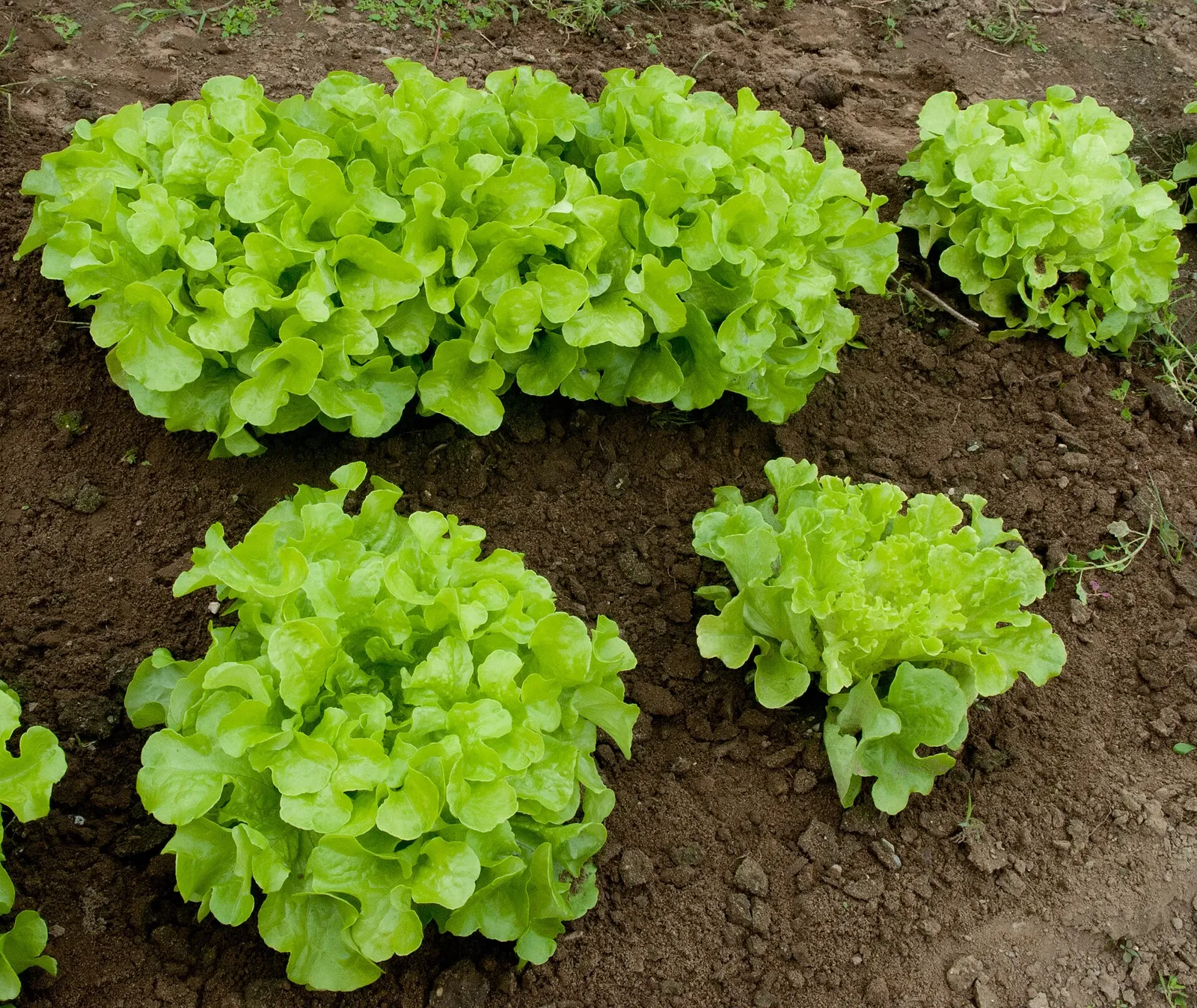
Lettuce is ready about 30 to 60 days after sowing. Pick the outer leaves of leaf types as soon as they are 3 to 4 inches, and cut head types when they are full and firm. Here are the cues, the cut-and-come-again trick, and how to beat the bolt.
Days to maturity
30–60days
Ready when
Full leaves; harvest before bolting
The short answer
Lettuce is ready about 30 to 60 days after planting. Pick the outer leaves of leaf lettuce as soon as they are 3 to 4 inches and the plant keeps making more (cut-and-come-again). Harvest head types like romaine and butterhead when they are full and firm. Cut in the cool morning and harvest before it bolts in heat, which turns it bitter.
The harvest window above comes from the days-to-maturity range for lettuce. The rest of this guide is how to read each type, pick it without killing the plant, and beat the bolt.
Days to maturity by type
The "right day" depends on which lettuce you grew. Leaf types finish fast and let you nibble early. Head types take longer because they have to wrap into a full center.
Use these as windows, not deadlines. Maryland Extension puts lettuce at 40 to 80 days depending on the type, and Illinois Extension lists leaf lettuce at 50 to 60 days, butterhead at 60 to 70 days, and crisphead ready as early as 55 days. The 30 to 60 day band on most seed packets reflects that you can start picking leaf types well before they finish.
| Lettuce type | Days to maturity | How to pick |
|---|---|---|
| Leaf (loose-leaf) | 30–60 | Take outer leaves at 3–4 in, or cut the whole plant at 5–6 in tall |
| Romaine / cos | 60–75 | Cut at the base when leaves overlap into a head 6–8 in tall |
| Butterhead / Bibb | 60–70 | Cut at the base when the center cups into a soft, loose head |
| Crisphead / iceberg | 55–80 | Cut at the base when the head feels firm and dense, like the store |
Your packet's day count is the start of the leaf window, not the finish line for heads. Soil temperature and water shift it.
How to tell it's ready
The calendar gets you close. The leaf and the head tell you the truth.
Check the cue that matches your type before you cut:
- Leaf size. For loose-leaf lettuce, the outer leaves are ready at about 3 to 4 inches. Maryland and Illinois Extension both say you can use the whole plant once it is 5 to 6 inches tall. There is no need to wait.
- Head firmness. For crisphead, squeeze gently. It should feel firm and dense, like a head from the store. Butterhead is ready when the center cups into a soft, loose head, and romaine when the leaves overlap into a head about 6 to 8 inches tall.
- Before a tall central stalk. Watch for a stalk shooting up from the center. That is bolting, and it means the plant is switching to making seed. Pick before it appears, because the leaves turn bitter once it does.
When in doubt, taste a leaf. Sweet and mild means go. Sharp and bitter means heat got to it.
How to harvest lettuce
How you cut depends on whether you want a few leaves now or the whole plant.
Leaf lettuce: cut-and-come-again. Pick the older, outer leaves and leave the small center leaves and the growing point alone. The plant keeps pushing new leaves for weeks. Maryland Extension notes that lettuce cut right above the soil will regrow and be ready to cut again in two to three weeks, so even a full cut is not the end. This is the same outer-leaf trick that keeps spinach producing.
Head lettuce: cut once at the base. For romaine, butterhead, and crisphead, slice the whole head off at the soil line with a sharp knife once it is full and firm. These do not come back, so harvest the whole row as it sizes up.
Cut in the morning. Illinois Extension says almost all vegetables are best harvested early in the morning, while the plant is cool and full of water. Lettuce picked in the cool of the day stays crisp instead of going limp.
Common mistake
Two things wreck a lettuce harvest. Letting it bolt is the big one. Minnesota Extension says several days above 75°F can make lettuce flower, and once that central stalk shoots up the leaves turn bitter and stay that way. The other is harvesting in midday heat, when the leaves are already warm and water-stressed and wilt almost as soon as you cut them.
Bolting and storage
Heat is the enemy of good lettuce. As the weather warms, growth slows, the leaves sharpen, and a seedstalk shoots up. Illinois Extension notes that high temperature or moisture stress makes lettuce bitter and bolt, and that Bibb in particular turns bitter readily above 75°F.
So in a heat wave, do not wait. If you see a stalk forming, harvest the whole plant right away before the bitterness sets in deeper.
Then cool it fast. Dry the leaves well, bag them, and refrigerate. Maryland and Clemson Extension say leaf and Bibb lettuce keep as long as four weeks when the leaves are dry before bagging, while crisphead keeps about two weeks. Illinois Extension says lettuce holds best at about 32°F and high humidity, which is your crisper drawer.
Pro tip
Pick outer leaves, not whole plants, to stretch one sowing into weeks of salad. Take the biggest outer leaves every few days and leave the center growing. The plant keeps replacing them, so a single short row of leaf lettuce can feed you far longer than a one-cut head ever will. It also buys time before the heat forces a bolt.
Get the spacing right next year
Crowded lettuce bolts faster and heads up poorly, because the plants compete for light and water and stress early. Give each one room and it sizes up clean and holds longer before bolting.
Leaf lettuce wants about 4 to 6 inches between plants, and head types want 10 to 12 inches. The plant spacing chart has the full crop list, and the Plant Spacing Calculator shows how many fit your bed.
Try it — Plant Spacing Calculator
Full calculatorExtra to cover losses (10% is typical).
You can plant
32plants
- Per row
- 8
- Rows
- 4
- Buy (incl. spare)
- 36 plants
Your next step
Lettuce is ready about 30 to 60 days after planting. Pick leaf types by the outer leaf once they hit 3 to 4 inches, cut head types at the base when they are full and firm, and do it in the cool morning before heat bolts the plant.
Planning the next sowing? Open the Plant Spacing Calculator and set your lettuce so it has room to size up and hold off the bolt.
Common questions
How do I know when lettuce is ready to pick?
For leaf lettuce, pick the outer leaves once they are about 3 to 4 inches, or use the whole plant once it is 5 to 6 inches tall, which Maryland and Illinois Extension both list. For head types, harvest when the head feels full and firm. Romaine is ready when the leaves overlap into a head about 6 to 8 inches tall. Most lettuce lands in the 30 to 60 day window.
Can you harvest lettuce more than once?
Yes, with leaf lettuce. Pick the older outer leaves and leave the center growing point, and the plant keeps making new leaves for weeks. Maryland Extension says lettuce cut about an inch above the soil will regrow and be ready to cut again in two to three weeks. Head types like crisphead are a one-time harvest.
Why is my lettuce bitter?
Heat. Lettuce is a cool-season crop, and Minnesota Extension notes that several days above 75°F can make it flower and turn bitter. Once a tall central stalk appears, the plant is bolting and the leaves turn sharp. Pick before that happens, and harvest in the cool morning for the mildest flavor.
What is the best time of day to harvest lettuce?
Early morning, while the plant is cool and full of water. Illinois Extension says almost all vegetables are best harvested early in the morning. If you have to pick later, keep the leaves out of direct sun and get them cool as fast as you can so they do not wilt.
How long does harvested lettuce keep?
Dry it well, bag it, and refrigerate it fast. Maryland and Clemson Extension say leaf and Bibb lettuce keep up to four weeks when the leaves are dry before bagging, while crisphead keeps about two weeks. Illinois Extension says lettuce holds best at about 32°F and high humidity.
Sources
Agronomic claims in this guide are checked against these primary sources.
- Growing Lettuce in a Home Garden — University of Maryland Extension
- Lettuce | Home Vegetable Gardening — University of Illinois Extension
- Lettuce — Clemson Cooperative Extension Home & Garden Information Center
- Growing lettuce, endive and radicchio in home gardens — University of Minnesota Extension
- Harvesting Vegetables: When and how to pick your vegetables for best quality — University of Illinois Extension
Keep reading
When to Harvest Spinach (Signs It's Ready)
Spinach is ready about 37 to 50 days after sowing, once a plant has five or six leaves that are 3 to 6 inches long. Pick the outer leaves or cut the whole plant above the crown, and harvest before it bolts in heat.
Read →When to Harvest Radishes (Signs They're Ready)
Salad radishes are ready fast, about 22 to 35 days after sowing, when the root is roughly 1 inch across at the soil line. Pull promptly, check the shoulder, and learn how daikon and winter types differ.
Read →When to Harvest Broccoli (Signs It's Ready)
Broccoli is ready about 60 to 90 days after planting, when the central head is 4 to 7 inches across with tight, dark-green buds, before any open to yellow. Here are the cues, the cut, and the weeks of side shoots that follow.
Read →When to Plant Zucchini (Frost + Soil Temp Timing)
Plant zucchini after your last spring frost, once the soil hits at least 60 F (ideally 65 to 70 F). Direct-sow seeds 1/2 to 1 inch deep, or set out transplants started 2 to 4 weeks earlier. Warm zones get a second fall crop.
Read →When to Plant Tomatoes (Frost + Soil Temp by Zone)
Set tomato transplants out 1 to 2 weeks after your last spring frost, once soil hits at least 60 F. Start seeds indoors 6 to 8 weeks before that frost date. Cold soil stalls them, so wait for warmth.
Read →When to Plant Swiss Chard (Spring and Fall Timing)
Plant swiss chard 2 to 4 weeks before your last spring frost, once the soil hits 40°F. Sow again 3 to 4 weeks before the first fall frost. Seeds go half an inch to an inch deep.
Read →