Harvest guide
When to Harvest Pumpkins (Signs They're Ready)
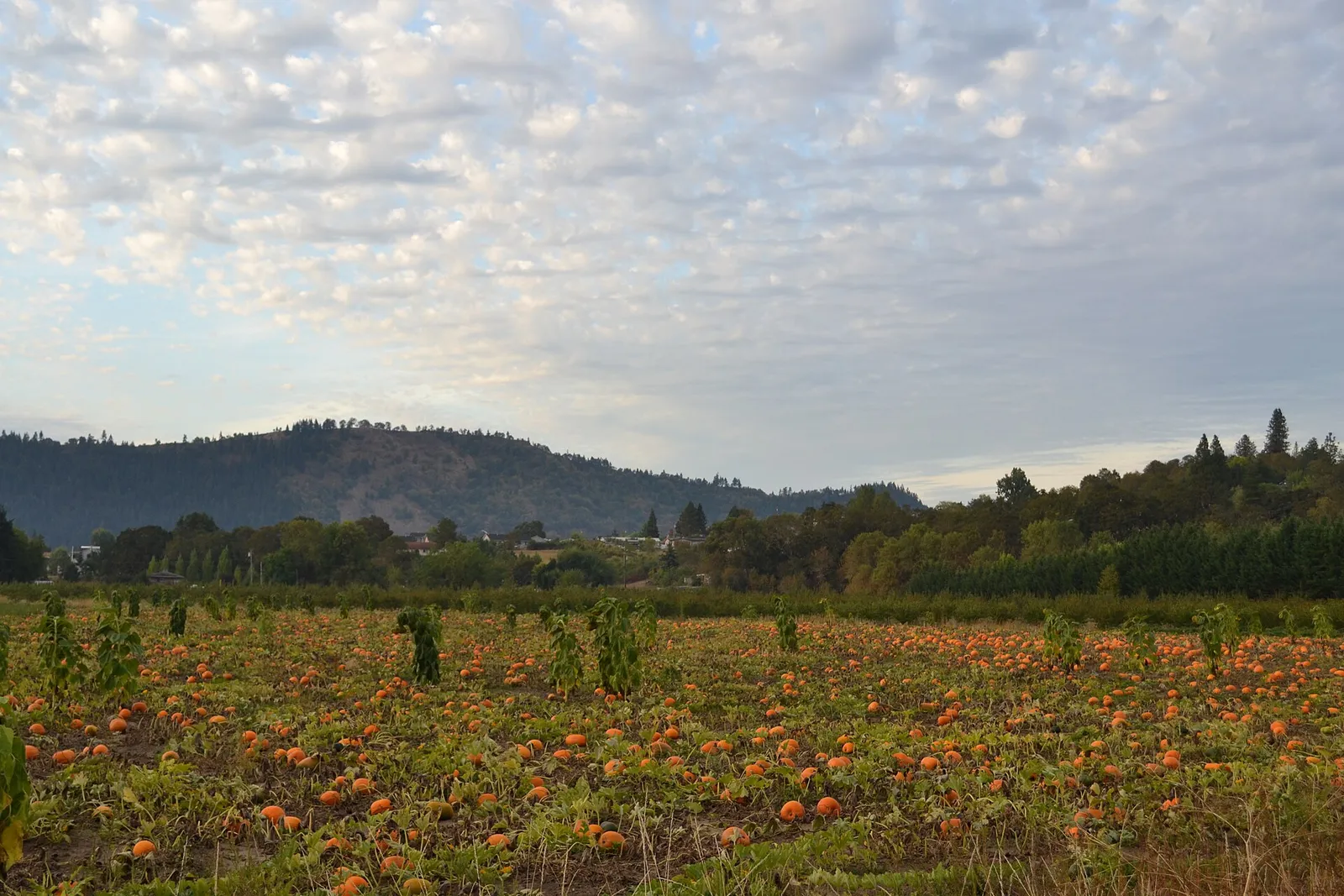
Pumpkins are ready about 90 to 120 days from planting, when the color is deep and even, the rind shrugs off a thumbnail, and the stem turns hard and woody.
Days to maturity
90–120days
Ready when
Full color, hard rind, woody stem
The short answer
Pumpkins are ready about 90 to 120 days from planting, when the skin is fully and deeply colored, the rind is hard enough that a thumbnail won't dent it, and the stem turns hard and woody. Harvest before a hard frost. Cut the fruit free and leave 3 to 4 inches of stem.
A pumpkin tells you when it is ready. The color goes deep and even, the shell stops giving under your thumbnail, and the stem dries to wood. Hit all three and it is time to cut.
The calendar is a backup, not the rule. Watch the fruit first, then check the days.
Days to maturity by type
Pumpkins ripen on their own schedule, and the type sets the clock. Small pie pumpkins finish fastest. Giants take the longest.
The number on your seed packet is your starting estimate. Count forward from planting, then start watching for the ripeness signs a couple of weeks ahead.
| Pumpkin type | Days to maturity | Notes |
|---|---|---|
| Pie / sugar | 90–100 | Small, sweet, for cooking |
| Jack-o'-lantern | 100–120 | Standard carving size |
| Giant | 110–130+ | Needs the longest, warmest season |
These ranges sit inside the consensus extension guidance for pumpkins, which runs roughly 90 to 120 days, with miniature types nearer 90 to 100 and large carving types nearer 100 to 120. Season length and weather move the real date, so let the plant confirm it.
How to tell they're ready
Ripeness is a checklist, not a guess. Run through these four signs before you cut anything.
- Deep, even color. The skin should turn its full variety color, orange for most, uniformly across the whole fruit. Penn State Extension looks for the color "uniformly across the entire fruit."
- Hard rind (the thumbnail test). Press a thumbnail into the skin. A ripe pumpkin resists and won't dent. The University of Minnesota Extension says a mature rind "should not dent when you press a fingernail into the skin."
- Hard, woody stem. The stem where it meets the fruit dries out and goes woody. Minnesota describes it becoming "hard and woody." A green, soft stem means wait.
- Hollow sound. Thump the side with a knuckle. A ripe pumpkin sounds hollow, like a drum. A dull thud usually means it needs more time.
One sign alone can fool you. Color can run ahead of a soft rind on a warm fall. Use all four together.
How to harvest
Cut, don't pull. Yanking or twisting tears the stem out, and a pumpkin missing its stem rots faster.
- Cut on a dry day with sharp pruning shears, loppers, or a knife.
- Leave 3 to 4 inches of stem on the fruit. Penn State calls it a "handle," and a long handle helps the pumpkin keep longer.
- Never carry the pumpkin by the stem. The stem snaps easily, and a broken stem opens the fruit to rot. Cradle it from underneath instead.
- Handle it gently. Bruises, cuts, and punctures all shorten storage time. Set pumpkins down, don't drop them.
If a stem does break off, that pumpkin won't store well. Use it first.
Common mistake
Three harvest mistakes that cost you good pumpkins:
- Carrying by the stem. It looks like a handle, but it breaks, and a stemless pumpkin rots from the top. Lift from the bottom every time.
- Harvesting after a hard freeze. Penn State warns a hard freeze below about 28°F "weakens the rind and gives bacteria an entry." A light frost on the leaves is fine. A hard freeze on the fruit is not.
- Picking green, under-ripe pumpkins. A fully green pumpkin won't ripen into a good one off the vine. If it has no color and the rind still dents, leave it on the plant.
Curing and storage
Curing is the step most people skip, and it is what turns a few weeks of shelf life into a few months. It hardens the rind and seals over small nicks.
Cure first. Set cut pumpkins in a single layer in a warm, dry, airy spot at about 80 to 85°F for roughly 10 days, per Penn State Extension. Minnesota frames it the same way and adds a clear finish line: the fruit is cured once a fingernail can no longer puncture the skin.
Then store cool and dry. Move cured pumpkins to about 50 to 55°F in a dry spot with some air movement. Keep them off cold floors and out of damp basements. Set them in a single layer so they don't touch.
Expect two to three months. Most pumpkins hold that long when cured and stored right, per Penn State. Don't let storage drop below 50°F, because cold injury shortens their life.
Pro tip
Cure right where they grew when the weather cooperates. A run of warm, dry early-fall days does the job outdoors in the field. Just bring pumpkins inside if a hard frost is in the forecast, the way the University of Minnesota Extension advises for fruit left out on the porch.
Where pumpkins fit your season
Pumpkins need a long, warm run and a lot of room, so they reward planning the season backward from frost. The same goes for two cousins on the calendar. See when to harvest butternut squash for the winter-squash version of the hard-rind test, and when to harvest sweet potatoes for another crop you dig just ahead of frost.
Giving those sprawling vines enough room is half the battle, and pumpkins want about 36 inches in the row.
Note
Pumpkins sprawl. Crowd them and you get fewer, smaller fruit that ripen unevenly. Plan the spacing before you plant, not after the vines take over the bed.
Your next step
Run the four signs together: deep even color, a rind that shrugs off a thumbnail, a hard woody stem, and a hollow thump. Cut before a hard freeze, leave a 3 to 4 inch handle, cure about 10 days, then store cool and dry.
Planning next year's patch? Size the spacing first in the Plant Spacing Calculator so those vines have the room they need to ripen full-size fruit.
How many plants fit your bed
When you replant, size the bed first. Run your dimensions through the calculator to see how many plants fit in square, triangular, and square-foot layouts.
Try it — Plant Spacing Calculator
Full calculatorExtra to cover losses (10% is typical).
You can plant
32plants
- Per row
- 8
- Rows
- 4
- Buy (incl. spare)
- 36 plants
Common questions
How many days does it take a pumpkin to grow?
Most pumpkins mature in about 90 to 120 days from planting. Small pie and miniature types run toward the shorter end, around 90 to 100 days. Large jack-o'-lantern and giant types need the full 100 to 120 days or more. Check the days-to-maturity number on your seed packet, then watch the plant for the ripeness signs.
Will pumpkins ripen off the vine?
A pumpkin that is already showing color will keep deepening and hardening after you pick it, especially through curing. A fully green, undersized pumpkin will not turn into a good orange one off the vine. Leave colored fruit on the plant as long as you safely can before a hard freeze, then cure what you cut.
Can you harvest pumpkins after a frost?
A light frost that nips the leaves is fine, and it can even help the vines die back. A hard freeze below about 28°F is the problem. Penn State Extension warns a hard freeze weakens the rind and gives bacteria a way in, which cuts storage life. Get colored pumpkins in before a hard freeze hits.
How do you cure pumpkins?
Set cut pumpkins in a single layer in a warm, dry, airy spot at about 80 to 85°F for roughly 10 days, per Penn State Extension. Curing hardens the rind and scabs over small nicks. The pumpkin is cured once a fingernail can no longer dent the skin. Then move it to cool storage.
How long do pumpkins last after harvest?
A cured pumpkin stored at about 50 to 55°F in a dry spot keeps two to three months for most types, per Penn State Extension. Keep them off cold floors and out of damp basements. Do not let storage drop below 50°F, since cold injury shortens their life.
Sources
Agronomic claims in this guide are checked against these primary sources.
- Harvesting and storing melons, squash and pumpkins — University of Minnesota Extension
- Harvesting and Storing Pumpkin and Winter Squash — Penn State Extension
Keep reading
When to Harvest Butternut Squash (Signs It's Ready)
Butternut squash is ready about 100 to 110 days from planting, when the rind turns deep tan, hardens past a thumbnail, and the stem goes corky and dry.
Read →When to Harvest Sweet Potatoes (Signs They're Ready)
Sweet potatoes are ready about 90 to 120 days after transplanting, before the first fall frost. Dig when the vines yellow, then cure before you eat them.
Read →When to Harvest Carrots (Signs They're Ready)
Carrots are ready about 50 to 80 days after sowing, when the shoulder is roughly 1/2 to 3/4 inch across at the soil line. Here are the cues, the lift-don't-yank method, and how to store them.
Read →When to Plant Zucchini (Frost + Soil Temp Timing)
Plant zucchini after your last spring frost, once the soil hits at least 60 F (ideally 65 to 70 F). Direct-sow seeds 1/2 to 1 inch deep, or set out transplants started 2 to 4 weeks earlier. Warm zones get a second fall crop.
Read →When to Plant Tomatoes (Frost + Soil Temp by Zone)
Set tomato transplants out 1 to 2 weeks after your last spring frost, once soil hits at least 60 F. Start seeds indoors 6 to 8 weeks before that frost date. Cold soil stalls them, so wait for warmth.
Read →When to Plant Swiss Chard (Spring and Fall Timing)
Plant swiss chard 2 to 4 weeks before your last spring frost, once the soil hits 40°F. Sow again 3 to 4 weeks before the first fall frost. Seeds go half an inch to an inch deep.
Read →