Harvest guide
When to Plant Butternut Squash (Soil Temp + Frost Timing)
Plant butternut squash after the last spring frost, once the soil holds 65 to 70°F, usually 1 to 2 weeks past frost. Most varieties need 100 to 110 warm days, so count back from your first fall frost for the late cutoff.
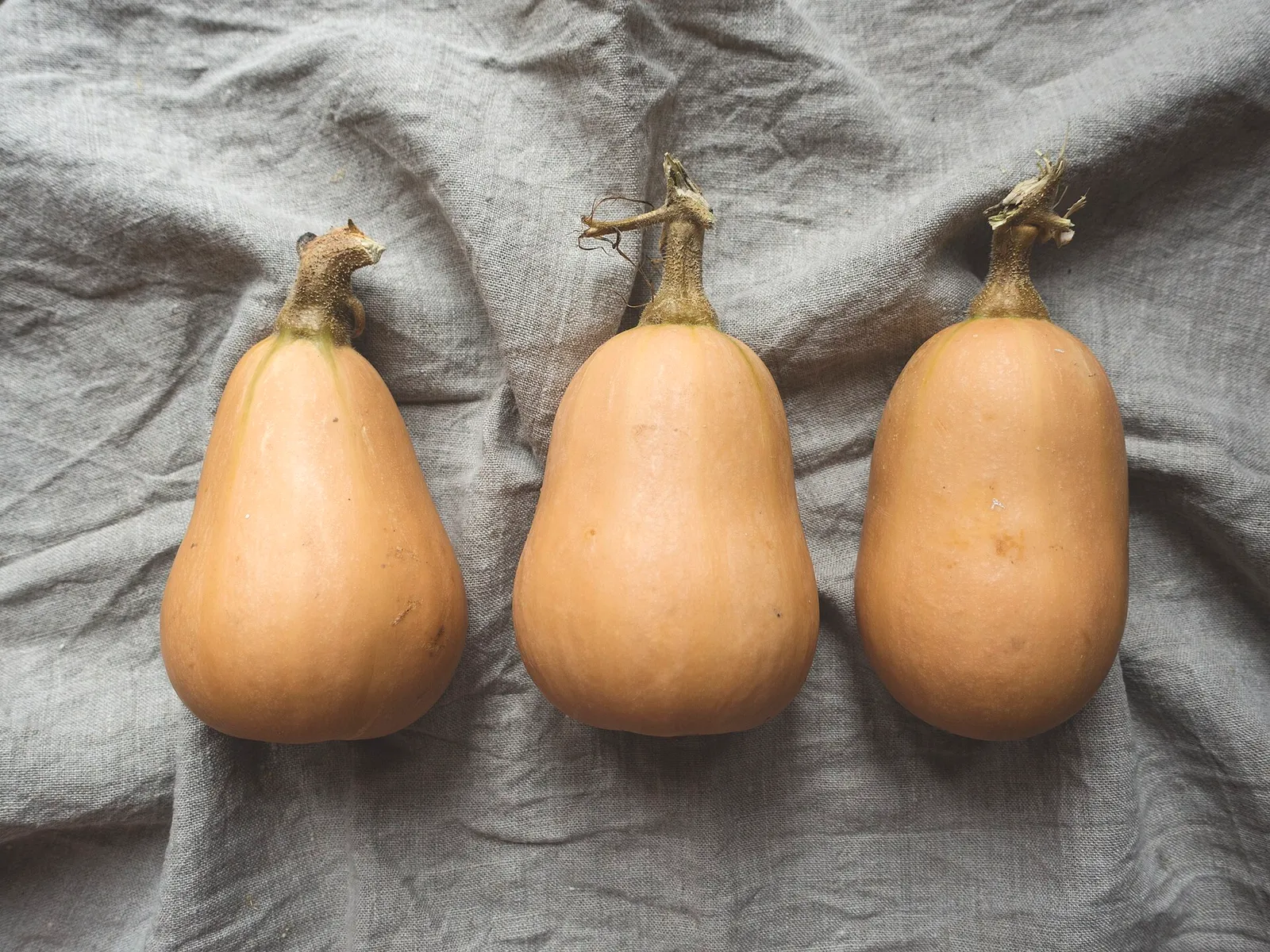
Days to maturity
100–110days
Ready when
Hard tan rind, dry stem, sounds hollow
The short answer
Plant butternut squash after the last spring frost, once the soil holds 65 to 70°F, usually 1 to 2 weeks past your frost date. Direct sow the seeds 1 inch deep. Most varieties need 100 to 110 warm days to mature, so in short-season areas start seeds indoors 3 to 4 weeks early.
Butternut squash is a warm-season crop with a long runway. It needs heat in the soil to sprout and a full summer to finish, so timing is about two dates, not one. You plant after the spring frost when the ground is warm, and you plant early enough that the fruit ripens before the fall frost. Get both right and the vine does the rest.
Plant after the last frost, once the soil is warm
The trigger is soil temperature, not the calendar. Cornell Home Gardening says to wait until the soil reaches at least 65°F, preferably 70°F or more, which usually lands about 2 weeks after your last frost date.
Cold soil is the real risk. Squash seeds can germinate from 60°F up, but they sprout slowly and rot easily in cool, wet ground, which is why Cornell pushes the target to 70°F before you sow. Warm soil is the difference between a seed up in a week and one that sits and rots.
So the rule everywhere is the same. Wait out the frost, then wait for the soil. A cheap soil thermometer pushed 2 inches deep in the morning tells you more than any planting calendar.
Planting window by USDA zone
Warmer zones thaw and warm earlier, so they plant earlier. The windows below are starting points keyed to a typical last-frost date, not hard deadlines. Your own frost date and soil reading win.
| USDA zone | Typical spring planting window | Method |
|---|---|---|
| Zone 5 | Late May – early June | Direct sow, or transplant early types |
| Zone 6 | Mid-May – early June | Direct sow |
| Zone 7 | Late April – mid-May | Direct sow |
| Zone 8 | March – April | Direct sow |
| Zone 9 | February – March | Direct sow (fall crop possible) |
NC State Extension treats butternut as a warm-season crop planted after frost danger passes, and the colder you garden, the later that date arrives. Shift earlier as you go south, later as you go north.
How to tell it is time
Three signs say the ground is ready. Run down them before you open the seed packet.
- The last spring frost date for your area has passed.
- Soil at 2 inches deep reads 65°F or warmer in the morning, ideally 70°F.
- Nighttime lows are staying above the mid-40s°F, so seedlings will not stall.
If all three are true, sow. If the soil is still cool but the frost date has passed, wait a week. Butternut planted into 60°F soil sulks, while the same seed in 70°F soil is up in under a week.
Pro tip
Warm the soil first in a cold spring. Lay black plastic or a dark tarp over the planting row for a week or two before sowing, and it can lift soil temperature several degrees. Cornell and UMN Extension both note that black plastic mulch warms the bed and gives heat-loving squash a faster, stronger start. Pull it back or cut planting holes once the soil reads 70°F.
Direct sow or start indoors
Direct sowing is the default. UMN Extension and Cornell both say winter squash is usually seeded right in the garden once the soil is warm, because the vines resent having their roots disturbed.
Start seeds indoors only when your season is short. UMN says squash seedlings take about 4 weeks from seeding to transplant, so count back 3 to 4 weeks from your last frost to start them inside. Cornell puts the indoor head start at the same 3 to 4 weeks.
Transplant carefully when you do. Use peat or paper pots you can plant whole, harden the seedlings off over a few days, and set them out only after the frost has passed and the soil has warmed.
The fall cutoff: count backward from frost
Spring frost is one bookend. The first fall frost is the other, and it sets your latest safe planting date.
Butternut needs a long, warm season. Most varieties, including the common Waltham butternut, run about 100 to 110 days from planting to a fully cured, storable squash. Days to maturity shift with variety and summer heat, so treat that as a range.
To find your late cutoff, count back from your average first fall frost.
latest planting date = first fall frost
                       − days to maturity (100–110)
                       − ~14 days of buffer
MOFGA stresses planting early enough for the fruit to mature before the first killing frost, and extension guides agree on the principle. In most US zones that puts the practical late cutoff for direct sowing somewhere between mid-June and early July. Miss it and the vine sets fruit that never hardens off.
Common mistake
The two timing errors that cost a crop are opposite ends of the season. Planting too early into cold soil rots the seed or stalls the seedling, and a squash that sits in 55°F ground for two weeks is often outrun by one sown later into warm soil. Planting too late is just as costly, since fruit that has not hardened its rind by the first frost will not cure or store. When in doubt, wait for 70°F soil in spring and sow by early July at the latest.
What comes after planting
Get the timing right and butternut is one of the easier crops to grow out. Give each plant room, because these vines sprawl. Our guide to how far apart to plant butternut squash walks the spacing, roughly 24 inches between plants in rows about 48 inches apart.
From there the season runs to fall. The same warm-soil, long-season rhythm drives when to harvest pumpkins, and the payoff for this planting is covered in when to harvest butternut squash, where the rind turns hard tan and the stem dries to cork. If you are timing the rest of the warm-season bed, when to plant tomatoes follows the same after-frost logic.
Your next step
Butternut squash comes down to two dates. Plant 1 to 2 weeks after your last spring frost, once the soil holds 65 to 70°F, and plant by early July so a 100 to 110 day crop still beats the fall frost. Push a soil thermometer in before you sow, and let the reading, not the calendar, make the call.
Planning the bed? Read how far apart to plant butternut squash and give each sprawling vine the room it needs.
Common questions
What month should I plant butternut squash?
It depends on your last spring frost, not the calendar. Warm zones (8 to 9) plant in March or April, zone 7 in late April to mid-May, and cold zones (5 to 6) in mid-May to early June. The rule is the same everywhere, plant 1 to 2 weeks after the last frost once soil reaches 65 to 70°F.
Can I direct sow butternut squash or should I start it indoors?
Direct sowing is the standard once soil is warm. Cornell and UMN Extension both say winter squash is usually direct seeded. Start seeds indoors only if your season is short. UMN says seedlings take about 4 weeks from seeding to transplant, so start them about 3 to 4 weeks before your last frost.
What soil temperature do butternut squash seeds need?
Squash seeds germinate in soil from 60°F up, but they do it poorly when cold. Cornell says to wait until soil is at least 65°F, preferably 70°F or more, before sowing. Cold, wet soil rots the seed instead of sprouting it, so a soil thermometer beats the calendar every time.
How many days does butternut squash take to mature?
Most butternut varieties need about 100 to 110 days from planting, including popular Waltham butternut. Days to maturity vary by variety and season. Count back that many days from your first fall frost, then add a 2 week buffer, to find your latest safe planting date.
How late can I plant butternut squash?
Plant late enough that the fruit still matures before your first fall frost. With a 100 to 110 day crop, count back from that frost date and add about 2 weeks of buffer. In most US zones the practical late cutoff for direct sowing falls between mid-June and early July.
Sources
Agronomic claims in this guide are checked against these primary sources.
- Squash, Winter - Growing Guide — Cornell University Home Gardening
- Butternut Squash — NC State Extension
- Growing squash and pumpkins in home gardens — University of Minnesota Extension
- Growing Winter Squash — Maine Organic Farmers and Gardeners Association
Keep reading
When to Harvest Butternut Squash (Signs It's Ready)
Butternut squash is ready about 100 to 110 days from planting, when the rind turns deep tan, hardens past a thumbnail, and the stem goes corky and dry.
Read →When to Plant Tomatoes (Frost + Soil Temp by Zone)
Set tomato transplants out 1 to 2 weeks after your last spring frost, once soil hits at least 60 F. Start seeds indoors 6 to 8 weeks before that frost date. Cold soil stalls them, so wait for warmth.
Read →When to Harvest Pumpkins (Signs They're Ready)
Pumpkins are ready about 90 to 120 days from planting, when the color is deep and even, the rind shrugs off a thumbnail, and the stem turns hard and woody.
Read →When to Plant Zucchini (Frost + Soil Temp Timing)
Plant zucchini after your last spring frost, once the soil hits at least 60 F (ideally 65 to 70 F). Direct-sow seeds 1/2 to 1 inch deep, or set out transplants started 2 to 4 weeks earlier. Warm zones get a second fall crop.
Read →When to Plant Swiss Chard (Spring and Fall Timing)
Plant swiss chard 2 to 4 weeks before your last spring frost, once the soil hits 40°F. Sow again 3 to 4 weeks before the first fall frost. Seeds go half an inch to an inch deep.
Read →When to Plant Sweet Potatoes (Soil Temp + Frost Timing)
Plant sweet potato slips 2 to 4 weeks after your last spring frost, once soil holds above 65°F. Get timing by zone, the soil-temp gate, and the mistake that rots slips in cold ground.
Read →