Harvest guide
When to Harvest Green Beans (Signs They're Ready)
Green beans are ready about 50 to 60 days (bush) or 60 to 70 days (pole), picked young when the pods are firm, smooth, pencil-thick, and 4 to 6 inches long, before the seeds bulge. Pick every 1 to 3 days to keep them coming.
The short answer
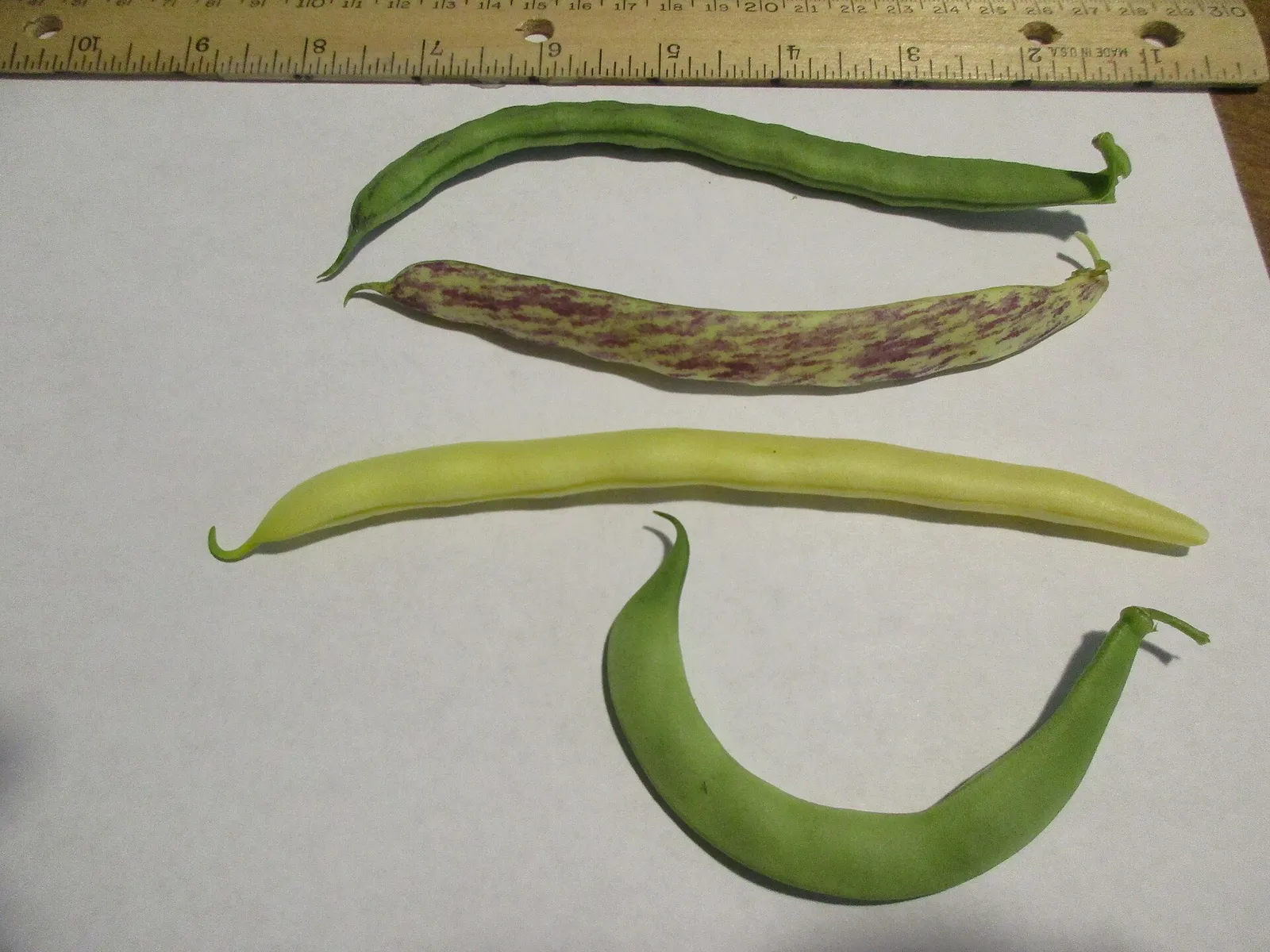
Green beans are ready about 50 to 60 days after planting for bush types and 60 to 70 days for pole types. Pick them young, when the pods are firm, smooth, about pencil-thick and 4 to 6 inches long, and snap clean. Pick before the seeds bulge through the pod, and pick every 1 to 3 days to keep the plant producing.
The card above gives you the window. The pod tells you the truth on any given day, and with green beans you want to catch them young, before the seeds swell. Below is how to read a ready pod, pick without tearing the plant, and keep the harvest coming.
Days to maturity by type
Bush and pole beans run on different clocks. Bush beans finish fast and come in one big wave. Pole beans start a little later and keep going for weeks.
Utah State Extension puts bush beans at 50 to 60 days to maturity. For pole beans, NC State Extension says 60 to 70 days from seeding to the first harvest. Treat these as windows, not deadlines, because variety and weather move them.
What matters more than the calendar is the pod itself. At the right stage, every type looks about the same.
| Bean type | Days to maturity | Pod at the snap stage |
|---|---|---|
| Bush | 50–60 | Firm and smooth, pencil-thick, 4–6 in long |
| Pole | 60–70 | Firm and smooth, pencil-thick, 4–6 in long |
Bush beans hand you most of their crop in a 2 to 3 week flush. Pole beans dribble in over five or six weeks, picked a few at a time, so the plant keeps working all season.
How to tell they're ready
A ready green bean is young, not full-grown. The pod should be firm and crisp, not lumpy and bulging with seeds.
Run down this checklist before you pick:
- Pencil-thick. The pod is about the diameter of a pencil, not fatter.
- 4 to 6 inches long. Full length for the variety, but still slim.
- Firm and smooth. No lumps showing the seeds underneath.
- Snaps clean. Bend one. A ready pod breaks crisp like a fresh bean should.
- Seeds still small. The beans inside are barely formed, not bulging.
Iowa State Extension sums it up plainly: harvest when the pods are young and firm with small seeds, "generally the diameter of a pencil and 4 to 6 inches long." Illinois Extension adds the line to watch for. If you can see a bean's outline through the pod, it is already overripe.
When you are not sure, snap one and look. A crisp pod with tiny seeds means pick the row now.
How to pick without wrecking the plant
Pick with two hands. Bean stems are brittle, and a one-handed yank can tear off a whole branch along with the pod.
Illinois Extension warns to "be careful not to break the stems or branches, which are brittle on most bean varieties." Bean plants also sit on shallow roots, so a hard pull can rock the whole plant loose. Here is the method:
- Hold the vine. Steady the stem just above the pod with one hand.
- Pinch or snap the pod. With your other hand, pull or pinch the pod free at its stem.
- Pick when the plants are dry. Wet bean foliage spreads disease, so harvest after the dew is gone.
That two-hand habit protects the pods still forming on the same stem. Strip a plant roughly and you lose next week's beans along with this week's.
Keep picking and they keep coming
Here is the part that pays off. Green bean pods do not regrow once you pick them, but the plant keeps setting brand-new pods as long as you keep the ripe ones off.
Illinois Extension explains the trade. The plant "continues to form new flowers and produces more beans if pods are continually removed before the seeds mature." Let pods sit and swell, and the plant reads that as its job being done. West Virginia University Extension puts the cost bluntly: leaving mature pods on the plant decreases yields, because the plant pours energy into seeds instead of new beans.
So pick every 1 to 3 days through the flush. Bush beans want a look every 1 to 2 days at their peak. Pole beans get picked about every 3 to 5 days over their longer run.
And if a few pods get away from you, they are not wasted. You can leave the oversized ones on the plant to dry fully, then shell them as dry beans for the pantry.
Common mistake
Two mistakes ruin a bean picking. Letting pods get oversized turns them stringy, lumpy, and tough, and the plant stops setting new pods. If the seeds show as bumps through the pod, it is past its snap stage. One-hand yanking is the other one. Bean stems are brittle and the roots are shallow, so a hard pull tears off branches and rocks the plant loose. Hold the stem, snap the pod.
Pro tip
At peak, pick every other day and pick in the morning. Pods size up fast in summer heat, and a bed that looked young on Monday can be tough by Thursday. Morning beans are crisp and cool, before the day's heat softens them, and a quick daily pass keeps the whole plant flowering.
Storing green beans
Get them cold fast and keep them dry. Green beans hold best chilled and unwashed until you cook them.
Illinois Extension says to store fresh beans unwashed in plastic bags in the crisper drawer for up to 3 days, and to wash them only right before you cook. Cooled and bagged well, they will stretch toward a week. Wash too early and they spoil faster, so keep them dry in the fridge until you are ready.
For the same pick-it-young rhythm on other summer crops, see when to harvest cucumbers, and for a vine that rewards patience instead, when to harvest tomatoes. Beans are also a close cousin of peas, which run on the same brittle-stem, pick-often rules.
Plan next year's bed
Crowded beans shade their own pods and make picking a hunt through tangled foliage. Give each plant room and the pods are easy to find and easy to read at the snap stage.
The plant spacing chart lists beans alongside the rest of the garden, and the Plant Spacing Calculator shows how many fit your row or bed.
Try it — Plant Spacing Calculator
Full calculatorExtra to cover losses (10% is typical).
You can plant
32plants
- Per row
- 8
- Rows
- 4
- Buy (incl. spare)
- 36 plants
Green beans are ready in 50 to 70 days, but the pod is the real signal. Firm, smooth, pencil-thick, and 4 to 6 inches long, snapping clean before the seeds bulge. Pick every 1 to 3 days with two hands, and the plant keeps handing you beans for weeks.
Planning your rows? Open the Plant Spacing Calculator and set your beans so every pod stays in easy reach.
Common questions
How do you tell when green beans are ready to pick?
Pick when the pods are young, firm, and smooth, about the diameter of a pencil and 4 to 6 inches long, and they snap clean when you bend one. Iowa State Extension describes this stage as pencil-thick pods with small seeds inside. Pick before the seeds swell and show as bumps through the pod.
Can you leave green beans on the vine too long?
Yes, and the quality drops fast. Left too long, the pods go lumpy and tough and the beans inside turn starchy. Illinois Extension says if you can see a bean's outline through the pod, it is overripe. Overgrown pods can still be left to dry fully and shelled as dry beans instead.
Do green beans regrow after you harvest them?
The picked pod does not regrow, but the plant keeps setting new pods if you keep picking. Illinois Extension says the plant continues to form new flowers and produce more beans when pods are removed before the seeds mature. Leave mature pods on and the plant slows down or stops.
What happens if you pick green beans too late?
The pods get lumpy, stringy, and tough, and the beans inside go starchy and lose their snap. West Virginia University Extension notes that leaving mature pods on the plant lowers your total yield, because the plant shifts energy into seeds instead of new pods. Overgrown pods can be dried and shelled.
How often should you pick green beans, bush or pole?
Pick every 1 to 3 days once pods start sizing up. Bush beans come in a heavy 2 to 3 week flush, so check them every 1 to 2 days. NC State Extension says pole beans are picked about every 3 to 5 days over a longer season. Frequent picking keeps the plant producing.
Sources
Agronomic claims in this guide are checked against these primary sources.
- Home Garden Green Beans — University of Georgia Cooperative Extension
- Snap Beans — University of Illinois Extension
- Growing Green Beans — Iowa State University Extension and Outreach
- Pole Bean Production — NC State Extension
- How to Grow Beans in Your Garden — Utah State University Extension
Keep reading
When to Harvest Peas (Snow, Snap & Shelling)
Peas are ready about 55 to 70 days after sowing. Pick snow peas while the pods are flat, snap peas when they are plump and glossy, and shelling peas when the pods are full and round. Pick every 1 to 2 days, because the sugars turn to starch fast.
Read →When to Harvest Cucumbers (Size + Signs)
Cucumbers are ready about 50 to 70 days after planting, when they are firm and evenly green at the right size for the type. Slicers want 6 to 8 inches, picklers 2 to 4. Pick every day or two before they yellow and turn bitter.
Read →When to Harvest Tomatoes (Signs They're Ready)
Tomatoes are ready about 60 to 85 days after transplant, when they are fully colored and give slightly to a gentle squeeze. Here are the cues, the twist-or-cut method, and how to ripen the rest on the counter.
Read →When to Plant Zucchini (Frost + Soil Temp Timing)
Plant zucchini after your last spring frost, once the soil hits at least 60 F (ideally 65 to 70 F). Direct-sow seeds 1/2 to 1 inch deep, or set out transplants started 2 to 4 weeks earlier. Warm zones get a second fall crop.
Read →When to Plant Tomatoes (Frost + Soil Temp by Zone)
Set tomato transplants out 1 to 2 weeks after your last spring frost, once soil hits at least 60 F. Start seeds indoors 6 to 8 weeks before that frost date. Cold soil stalls them, so wait for warmth.
Read →When to Plant Swiss Chard (Spring and Fall Timing)
Plant swiss chard 2 to 4 weeks before your last spring frost, once the soil hits 40°F. Sow again 3 to 4 weeks before the first fall frost. Seeds go half an inch to an inch deep.
Read →