Harvest guide
When to Harvest Peas (Snow, Snap & Shelling)
Peas are ready about 55 to 70 days after sowing. Pick snow peas while the pods are flat, snap peas when they are plump and glossy, and shelling peas when the pods are full and round. Pick every 1 to 2 days, because the sugars turn to starch fast.
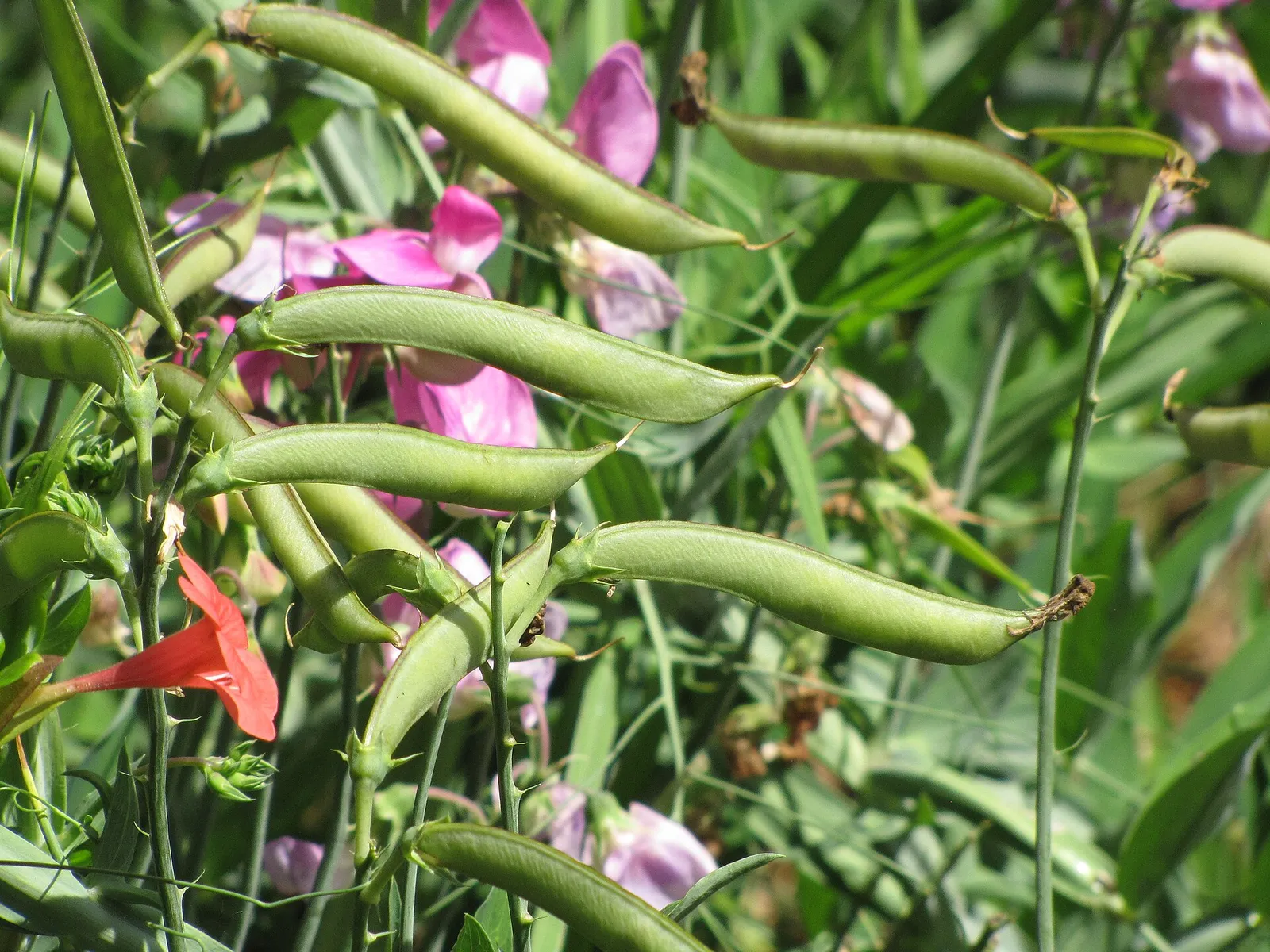
Days to maturity
55–70days
Ready when
Pods plump and bright; shelling peas firm
The short answer
Peas are ready about 55 to 70 days after sowing. Pick snow peas when the pods are flat and the peas are just forming. Pick snap peas when the pods are plump but still glossy and crisp. Pick shelling peas when the pods are full and rounded but still bright green. Pick every 1 to 2 days — the sugars turn to starch fast.
The harvest card above gives the day range. The catch with peas is that "ready" looks different for each of the three types, and the window is short. Below is how to read each pod, pick without wrecking the vine, and keep what you bring in.
Days to maturity by type
The packet day count gets you close, but the pods tell you the truth. Most peas finish in the 55 to 70 day band.
University of Maryland Extension lists 50 to 70 days from direct seeding. Iowa State Extension puts it at 50 to 75 days depending on the variety, and Illinois Extension says most varieties need about 60 days. Use these as windows, not deadlines.
What changes between types is not so much the calendar as what the pod should look like on the day you pick.
| Pea type | What the pod looks like at harvest | Days to maturity |
|---|---|---|
| Snow | Full length but still flat, peas only just forming inside | 55–70 |
| Snap | Plump and almost filled, still glossy, crisp, and bright | 55–70 |
| Shelling (English / garden) | Full and rounded, well-filled, still bright green | 55–70 |
The same plant can give you pickable pods over two to three weeks. The pods low on the plant fill first, so start at the bottom and work up.
How to tell they're ready
The trick is matching the cue to the type. Snow, snap, and shelling peas are eaten at three different stages of fill.
Check the right sign for what you grew:
- Snow peas — flat. Pick when the pods reach their full length but are still flat, with the peas showing only as small traces. Illinois Extension says to wait until the pods reach full length, and UMN Extension says to pick before the peas grow to the size of BBs, while the pods are still flat. Once they bulge, snow peas turn tough.
- Snap peas — plump and glossy. Pick when the pods are almost filled and rounded but the skin is still tight, crisp, and shiny. Illinois Extension says snap peas are ready when the pods appear almost filled with peas but are still tender and juicy. Snap one to test. It should break clean like a green bean.
- Shelling peas — full and round. Pick when the pods are well-filled and rounded but still bright green. University of Maryland Extension says to shell them when pods are plump and well-filled, but before the seed becomes starchy. A pod that shows a hard, bumpy outline has gone too far.
When in doubt, open one pod and taste a raw pea. A sweet, tender pea means pick now. A starchy, mealy one means you waited too long on that section.
How to harvest peas
Pick with two hands. Pea vines are brittle, and a one-handed yank pulls the vine off the trellis or snaps the stem.
Here is the method Illinois Extension recommends:
- Hold the vine. Grip the plant stem just above the pod with one hand so the vine stays put.
- Pick with the other hand. Use your free hand to pull or pinch the pod off at its stem.
- Work bottom to top. The lowest pods mature first, so pick those and leave the upper pods to fill.
That hold-and-pick habit matters more than it sounds. Strip a vine one-handed and you can tear loose a whole section of plant, losing the pods that were still coming.
Common mistake
Two things wreck a pea harvest. Leaving pods on too long lets the sugar turn to starch, so the pods go dull, thick, and tough and the peas taste mealy. Illinois Extension says peas can be inedible as fresh peas within one to three days of hitting maturity. And one-hand pulling snaps the brittle vines and strands the pods still ripening above. Hold the stem, pick with the other hand.
Why frequent picking matters
Pick every 1 to 2 days once the pods start filling. This is not fussiness. It is the difference between sweet peas and starchy ones, and between a long harvest and a short one.
Two things are happening at once. The peas are racing from sugar to starch, and the plant is deciding how many more pods to set. Illinois Extension says to sample the crop each day, picking snow peas at least every other day and snap peas every one to three days. Keep the ripe pods picked and the plant keeps producing. Let pods mature on the vine and the plant slows down or stops.
The sugar-to-starch clock is fast even after you pick. Illinois Extension notes that as much as 40 percent of the sugar can convert within a few hours, even in the fridge. So plan to eat, cook, or freeze peas the day you pick them.
For storage, cool them fast. University of Maryland Extension says to cool peas quickly to pull out the field heat, with about 32°F as the ideal, and store them in a vented plastic bag in the refrigerator. Iowa State Extension says fresh peas hold for up to three days, or up to a week if cooled and stored well. Anything longer, freeze them.
Pro tip
Taste before you trust your eyes. The pods can look right and still be a day past sweet, especially in warm weather, which speeds the sugar-to-starch turn. Open one pod from the middle of the row and eat a raw pea each time you pick. Sweet and tender means keep going. Starchy and dull means pick that whole section now and eat it tonight.
Get the spacing right next year
Crowded peas climb over each other, shade their own pods, and make picking a hunt. Give them room and the pods are easy to find and easy to read.
Sow peas about 1 to 2 inches apart in the row and let them climb a trellis or netting. The plant spacing chart has the full crop list, and the Plant Spacing Calculator shows how many fit your bed or row.
Try it — Plant Spacing Calculator
Full calculatorExtra to cover losses (10% is typical).
You can plant
32plants
- Per row
- 8
- Rows
- 4
- Buy (incl. spare)
- 36 plants
Peas are an early-season crop, so they pair well with quick greens. The same pick-it-young rule shows up in when to harvest lettuce and when to harvest spinach.
Your next step
Peas are ready in the 55 to 70 day window, but the pod is the real signal. Flat for snow, plump and glossy for snap, full and round for shelling. Pick every 1 to 2 days with two hands, and eat or freeze them the same day before the sugar turns.
Planning the next sowing? Open the Plant Spacing Calculator and set your peas so the pods stay easy to reach and easy to read.
Common questions
How do I know when peas are ready to pick?
It depends on the type. Pick snow peas when the pods reach full length but are still flat, with the peas only just forming. Pick snap peas when the pods are plump and almost filled but still glossy and crisp. Pick shelling peas when the pods are full and rounded but still bright green, before the seeds go hard. Most peas land in the 55 to 70 day window after sowing.
Can you leave peas on the vine too long?
Yes, and it happens fast. Left too long, the sugar in the peas turns to starch and the pods go dull, thick, and tough. Illinois Extension says peas can become inedible as fresh peas within one to three days of reaching maturity. University of Maryland Extension describes over-mature peas as starchy, thick, and tough. Pick on the early side rather than the late side.
How often should I pick peas?
Every 1 to 2 days once the pods start filling. Illinois Extension says to sample the crop each day, picking snow peas at least every other day and snap peas every one to three days. Frequent picking keeps the quality high and pushes the plant to set more pods.
Why do peas get starchy so quickly?
Peas store energy as sugar, and that sugar converts to starch as the seed matures and after picking. Illinois Extension notes that as much as 40 percent of the sugar can convert within a few hours, even under refrigeration. That is why peas taste best eaten, cooked, or frozen the same day you pick them.
How do I store peas after harvest?
Cool them fast and keep them cold. University of Maryland Extension says to cool peas quickly to remove field heat, with about 32°F as the ideal, and store them in a vented plastic bag in the refrigerator. Iowa State Extension says fresh peas hold for up to three days, or up to a week if cooled and stored well. For longer, freeze them the day you pick.
Sources
Agronomic claims in this guide are checked against these primary sources.
- Peas — University of Illinois Extension
- Growing peas in home gardens — University of Minnesota Extension
- Growing Peas in Iowa — Iowa State University Extension and Outreach
- Growing Green Peas in a Home Garden — University of Maryland Extension
Keep reading
When to Harvest Green Beans (Signs They're Ready)
Green beans are ready about 50 to 60 days (bush) or 60 to 70 days (pole), picked young when the pods are firm, smooth, pencil-thick, and 4 to 6 inches long, before the seeds bulge. Pick every 1 to 3 days to keep them coming.
Read →When to Harvest Lettuce (Leaf + Head Types)
Lettuce is ready about 30 to 60 days after sowing. Pick the outer leaves of leaf types as soon as they are 3 to 4 inches, and cut head types when they are full and firm. Here are the cues, the cut-and-come-again trick, and how to beat the bolt.
Read →When to Harvest Spinach (Signs It's Ready)
Spinach is ready about 37 to 50 days after sowing, once a plant has five or six leaves that are 3 to 6 inches long. Pick the outer leaves or cut the whole plant above the crown, and harvest before it bolts in heat.
Read →When to Plant Zucchini (Frost + Soil Temp Timing)
Plant zucchini after your last spring frost, once the soil hits at least 60 F (ideally 65 to 70 F). Direct-sow seeds 1/2 to 1 inch deep, or set out transplants started 2 to 4 weeks earlier. Warm zones get a second fall crop.
Read →When to Plant Tomatoes (Frost + Soil Temp by Zone)
Set tomato transplants out 1 to 2 weeks after your last spring frost, once soil hits at least 60 F. Start seeds indoors 6 to 8 weeks before that frost date. Cold soil stalls them, so wait for warmth.
Read →When to Plant Swiss Chard (Spring and Fall Timing)
Plant swiss chard 2 to 4 weeks before your last spring frost, once the soil hits 40°F. Sow again 3 to 4 weeks before the first fall frost. Seeds go half an inch to an inch deep.
Read →