Harvest guide
When to Plant Peas (Spring and Fall Timing by Zone)
Plant peas 4 to 6 weeks before your last spring frost, as soon as the soil can be worked and hits at least 40°F. Seedlings shrug off light frost, so peas go in early. Sow a fall crop 8 to 10 weeks before the first fall frost.
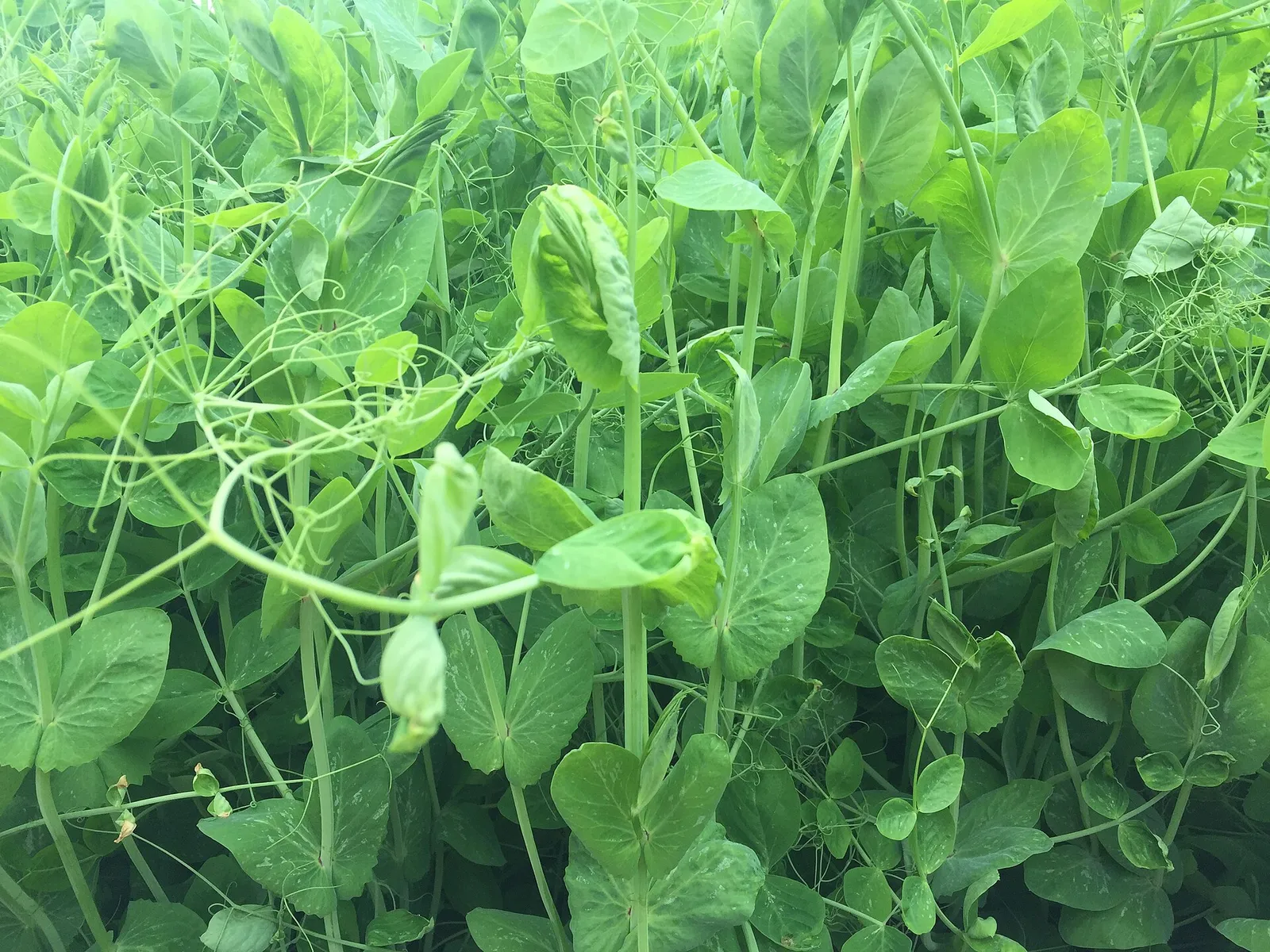
Days to maturity
55–70days
Ready when
Pods plump and bright; shelling peas firm
The short answer
Plant peas 4 to 6 weeks before your last spring frost, as soon as the soil can be worked and reaches at least 40°F. The seedlings are hardy and take a light frost, so peas go in earlier than most crops. They bolt in summer heat, so sow a fall crop 8 to 10 weeks before the first fall frost.
Peas are one of the first things you can plant each year. They are a cool-season crop that likes the cold, damp start of spring and quits once summer heat sets in. Get them in early and you pick pods before the weather turns. This guide covers when to plant by season and zone, the soil temperature to wait for, and how deep to sow.
When to plant peas in spring
Sow your spring peas 4 to 6 weeks before the last frost, or as soon as the soil can be worked. Peas are tough. They do not wait for warm days the way beans or tomatoes do.
University of Maryland Extension calls peas a hardy crop that withstands heavy frosts in spring and fall. Iowa State Extension adds that they should go in as soon as the ground can be worked. That cold tolerance is what lets them beat the frost-free date by more than a month.
The one hard floor is soil temperature. Pea seed will sprout in soil as cool as 40°F, so wait until the ground has thawed and drained before sowing. Cold, soggy soil is where early peas rot.
Pro tip
Test the soil before you sow. Squeeze a handful: if it crumbles, it is ready, and if it stays in a wet ball, give it a few more days. A cheap soil thermometer pushed 2 inches down settles the rest. Once it reads 40°F and rising, your peas can go in, frost in the forecast or not.
When to plant peas in fall
For a fall crop, sow 8 to 10 weeks before your first fall frost, so the vines mature into cooling weather instead of summer heat. Fall peas can be sweet, but the start is the hard part.
Late-summer soil is often hot and dry, and germination suffers. Iowa State Extension notes a fall crop is workable in cooler regions, while Maryland warns that fall peas there often perform poorly because warm soil and heat interfere with germination and growth. Water to cool the seedbed, sow a little deeper for moisture, and accept that fall is the gamble, not the sure thing.
In mild southern zones the whole calendar shifts. Gardeners there often skip a hot-summer peak entirely and grow peas through fall, winter, and very early spring.
Pea planting windows at a glance
The table below ties the timing to the two anchors that actually matter: your frost dates and the soil temperature. Treat the windows as starting points and watch your own ground, not the calendar.
| Season / climate | When to sow | Target soil temp | Method |
|---|---|---|---|
| Spring (most US zones) | 4–6 weeks before last frost | 40°F minimum, ~75°F ideal | Direct seed |
| Fall (cooler zones) | 8–10 weeks before first frost | Below 80°F to germinate | Direct seed, water to cool |
| Cold northern zones | As soon as soil works in spring | 40°F and rising | Direct seed |
| Mild southern zones | Fall through early spring | 40–75°F | Direct seed |
Peas germinate over a wide band. University of Minnesota Extension puts the practical floor at 40°F, and Utah State Extension says soil and air should stay below 80°F for the best germination and growth. Push past that and germination drops off, which is the real reason summer sowings struggle.
How to tell it is time to plant
Watch the soil, not the date. Two simple checks tell you the ground is ready for peas.
- The soil is workable. Squeeze a handful. If it crumbles apart, it is ready. If it packs into a wet ball, wait.
- The soil has reached 40°F. A soil thermometer 2 inches down confirms it. Below 40°F the seed just sits and risks rotting in cold, wet ground.
Frost in the forecast is not a reason to hold off. Pea seedlings are genuinely hardy. Maryland Extension lists them among the crops that take heavy frost, and Iowa State notes the young plants tolerate light freezes. A hard freeze can still nip tender growth, so a row cover on the coldest nights is cheap insurance, not a requirement.
When you do sow, set the seed about 1/2 to 1 inch deep and 1 to 2 inches apart in the row, per University of Minnesota Extension and Utah State Extension. Go to the deeper end in dry or sandy ground, where the seed needs to reach moisture. For the full row layout, see how far apart to plant peas.
Spring vs fall: the honest trade-off
Spring is the default, and for most US gardeners it is the only crop worth planning on. Peas want a long, cool runway to flower and fill pods, and spring gives them that before the heat arrives.
Fall is the bonus crop. It works best in cooler zones where late summer is not brutal, and even then the germination window is fussy. If your summers are hot, treat a fall sowing as an experiment, not a guarantee.
How long until you pick depends on the type, but the spread is narrow. Most peas mature in 50 to 70 days from sowing.
| Pea type | Days to maturity |
|---|---|
| Shelling (garden) peas | 55–70 days |
| Snap peas | 55–70 days |
| Snow peas | 50–70 days |
University of Minnesota Extension gives peas roughly 60 to 70 days to maturity, and Iowa State puts the range nearer 50 to 70, depending on the variety. Whichever type you grow, the seed packet has the exact number. For the ripeness signs once the pods set, see when to harvest peas.
Common mistakes when planting peas
The mistakes that cost a pea crop come down to soil and timing, and most of them are the same error in two directions.
Common mistake
Sowing into cold, wet soil too early. It is tempting, because peas are hardy and you want them in. But seed sown below 40°F into soggy ground rots before it sprouts. Hardy refers to the seedlings, not the seed. Wait until the bed drains and the soil thermometer reads 40°F, even if that means holding off a week past the date you had in mind.
The other mistake is planting too late. Peas race against summer. Sow them after the weather has warmed and they flower into heat, drop blossoms, and turn tough and starchy before the pods fill. Early is almost always better than late.
Peas share the cool-season rhythm of other early crops. The same sow-early, sow-again-in-fall timing drives when to plant lettuce, and the fall-planted when to plant garlic keeps a bed working into the off-season.
Your next step
Plant peas early. Sow 4 to 6 weeks before your last spring frost, as soon as the soil can be worked and reads 40°F, and do not let a light frost scare you off. Set the seed 1 to 2 inches deep, about 1 to 2 inches apart, and let the cool weather do the work. If your zone allows it, sow again 8 to 10 weeks before the first fall frost for a second pick.
Ready to lay out the row? See how far apart to plant peas to space seeds and trellis so every vine has room to climb.
Common questions
What month do you plant peas?
It depends on your last frost, not the calendar. Most US gardeners sow the spring crop in March or April, 4 to 6 weeks before the last frost, as soon as the ground can be worked. In warm southern zones, plant in late winter. For a fall crop, sow in late summer, 8 to 10 weeks before the first frost.
Can you plant peas too early?
You can sow surprisingly early because peas are hardy, but the soil sets the limit. University of Maryland Extension says germination is delayed below 40°F, and seed sown into cold, wet ground can rot before it sprouts. Wait until the soil drains and reaches 40°F rather than going by the date.
What soil temperature do peas need to germinate?
Pea seed sprouts in soil as cool as 40°F, the practical floor. University of Maryland Extension says germination is delayed below 40°F and speeds up as soil warms toward 75°F, while Utah State Extension wants it below 80°F. Below 40°F the seed sits and may rot, so a soil thermometer beats the date.
What temperatures can peas tolerate?
Peas are a hardy, cool-season crop. University of Maryland Extension says they withstand heavy frosts in spring and fall, and Iowa State notes the plants tolerate light freezes. Young seedlings handle a light frost well, but a hard freeze can damage tender growth and, later, the blossoms.
How long do peas take to grow?
Most peas mature in about 50 to 70 days from sowing, depending on variety. University of Minnesota Extension gives roughly 60 to 70 days, and Iowa State puts the range near 50 to 70. Shelling, snap, and snow types all fall in that band, so check your seed packet for the exact number.
Sources
Agronomic claims in this guide are checked against these primary sources.
- Growing peas in home gardens — University of Minnesota Extension
- Peas — University of Maryland Extension
- Yard and Garden: Growing Peas in the Home Garden — Iowa State University Extension
- How to Grow Peas in Your Garden — Utah State University Extension
Keep reading
When to Harvest Peas (Snow, Snap & Shelling)
Peas are ready about 55 to 70 days after sowing. Pick snow peas while the pods are flat, snap peas when they are plump and glossy, and shelling peas when the pods are full and round. Pick every 1 to 2 days, because the sugars turn to starch fast.
Read →When to Plant Lettuce (Spring and Fall Timing by Zone)
Plant lettuce 2 to 4 weeks before your last spring frost, once the soil hits 40°F. It germinates best at 60 to 70°F and bolts in summer heat, so sow again 6 to 8 weeks before the first fall frost.
Read →When to Plant Garlic (Fall Timing by Zone)
Plant garlic in fall, about 3 to 6 weeks before the ground freezes, so roots set before winter. That lands mid-September to November across most US zones. Plant cloves 2 inches deep, pointy end up, 4 to 6 inches apart.
Read →When to Plant Zucchini (Frost + Soil Temp Timing)
Plant zucchini after your last spring frost, once the soil hits at least 60 F (ideally 65 to 70 F). Direct-sow seeds 1/2 to 1 inch deep, or set out transplants started 2 to 4 weeks earlier. Warm zones get a second fall crop.
Read →When to Plant Tomatoes (Frost + Soil Temp by Zone)
Set tomato transplants out 1 to 2 weeks after your last spring frost, once soil hits at least 60 F. Start seeds indoors 6 to 8 weeks before that frost date. Cold soil stalls them, so wait for warmth.
Read →When to Plant Swiss Chard (Spring and Fall Timing)
Plant swiss chard 2 to 4 weeks before your last spring frost, once the soil hits 40°F. Sow again 3 to 4 weeks before the first fall frost. Seeds go half an inch to an inch deep.
Read →